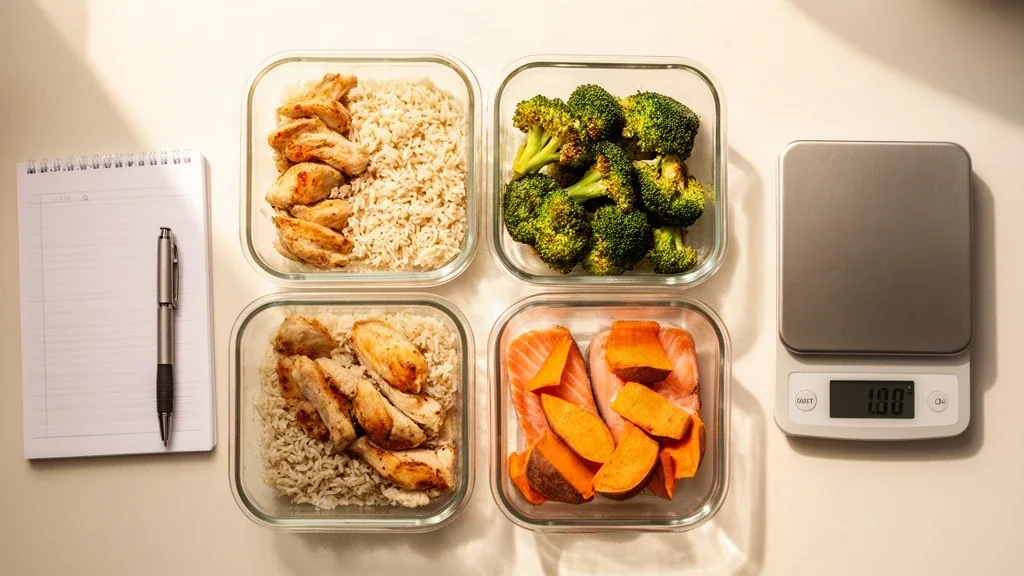
The Complete Macro Meal Planning Guide: From Targets to Groceries
The biggest point of failure in nutrition planning is the gap between calculating macro targets and buying groceries. Most people know how to use an online calculator to determine that they need 2,000 calories with 160 grams of protein. But when they stand in the kitchen on a busy Tuesday evening, abstract numbers on a screen do not tell them what to put in the pan.
Macro meal planning is the systematic process of reverse-engineering your daily caloric and macronutrient targets into repeatable, real-world meals.
This guide provides the complete end-to-end framework: calculating your baseline energy expenditure, setting evidence-based macronutrient distributions, breaking daily targets into balanced meals, assembling a structured grocery list, and executing a streamlined 60-minute weekly batch prep.
Step 1: Calculate Energy Expenditure (TDEE)
Before allocating macronutrient grams, you must establish your total daily energy expenditure (TDEE). Energy balance is the fundamental law governing body mass:
TDEE = Basal Metabolic Rate (BMR) × Physical Activity Level (PAL)
1. Calculate Basal Metabolic Rate (BMR)
The Mifflin-St Jeor equation (Mifflin et al. 1990) is the most reliable clinical formula for non-obese and overweight populations:
- Men: BMR = (10 × weight in kg) + (6.25 × height in cm) - (5 × age in years) + 5
- Women: BMR = (10 × weight in kg) + (6.25 × height in cm) - (5 × age in years) - 161
Example: A 30-year-old male weighing 80 kg (176 lbs) at 180 cm tall: BMR = (10 × 80) + (6.25 × 180) - (5 × 30) + 5 = 800 + 1,125 - 150 + 5 = 1,780 kcal
2. Apply Physical Activity Multiplier (PAL)
Multiply your BMR by your realistic weekly physical activity level:
| Activity Level | Description | PAL Multiplier | Example TDEE (1,780 BMR) |
|---|---|---|---|
| Sedentary | Desk job, little to no structured exercise | 1.20 | 2,136 kcal |
| Lightly Active | 1–3 days/week of light lifting or walking | 1.375 | 2,448 kcal |
| Moderately Active | 3–5 days/week of moderate resistance training | 1.55 | 2,759 kcal |
| Very Active | 6–7 days/week of intense training or physical labor | 1.725 | 3,071 kcal |
3. Adjust for Body Composition Goals
- Fat Loss (Deficit): Reduce maintenance TDEE by 15–20% (e.g., 2,500 × 0.80 = 2,000 kcal).
- Muscle Gain (Surplus): Increase maintenance TDEE by 5–10% (e.g., 2,500 × 1.10 = 2,750 kcal).
- Maintenance / Recomposition: Maintain estimated TDEE baseline.
For post-dieting strategies and metabolic recovery, see our guide on reverse dieting explained.
Step 2: Set the Macronutrient Hierarchy
Core Nutrition Planning & Macro Balance Protocol
- Calculate daily energy expenditure using Mifflin-St Jeor formulas and adjust for target rate of change.
- Distribute protein evenly across breakfast, lunch, dinner, and snacks for continuous muscle protein synthesis.
- Use digital food scales and airtight meal prep containers to eliminate guesswork in weekly nutrition.
Macro arithmetic verified against USDA FoodData Central and Atwater 4P+4C+9F standard.
Once your daily calorie ceiling is fixed, allocate your grams using the evidence-based hierarchy: Protein → Fats → Carbohydrates.
Macronutrient Allocation Flow:
[1. Total Calories] ➔ [2. Set Protein (1.6–2.2g/kg)] ➔ [3. Set Fat (0.6–1.0g/kg)] ➔ [4. Allocate Remaining Calories to Carbs]
1. Protein Target (4 kcal/g)
According to the systematic review and meta-analysis by Morton et al. 2018 and the International Society of Sports Nutrition (Jäger et al. 2017), optimal protein intake for preserving and building lean muscle tissue ranges between 1.6 to 2.2 grams per kilogram of body weight (0.73 to 1.0 grams per pound) per day.
- 80 kg lifter target: 80 × 2.0g = 160g Protein (160 × 4 = 640 kcal)
2. Dietary Fat Target (9 kcal/g)
Dietary fats are essential for steroid hormone synthesis, cellular membrane integrity, and fat-soluble vitamin absorption (A, D, E, K). Maintain fat intake between 0.6 to 1.0 grams per kilogram (or 20% to 30% of total daily energy).
- 80 kg lifter target (28% of 2,000 kcal): 558 kcal / 9 kcal/g ≈ 62g Fat
3. Carbohydrate Target (4 kcal/g)
Carbohydrates supply muscular glycogen for high-intensity training. Allocate all remaining calories to carbohydrates:
Carb Calories = Total Calories - (Protein Calories + Fat Calories) Carb Calories = 2,000 - (640 + 558) = 802 kcal Carbohydrate Grams = 802 kcal / 4 kcal/g ≈ 200g Carbohydrates
Final Daily Target: 2,000 kcal | 160g P | 200g C | 62g F
Step 3: Meal Frequency and Protein Distribution
Distributing your daily protein evenly across multiple feedings optimizes muscle protein synthesis (MPS).
Research by Schoenfeld & Aragon 2018 demonstrates that maximizing anabolism requires approximately 0.40 to 0.55 g/kg of protein per meal across 3 to 4 meals (roughly 30g to 50g of high-quality protein per feeding). For deep analysis on per-meal absorption thresholds, read is there a maximum protein per meal?.
Optimal Meal Split Models
| Strategy | Structure | Protein per Feeding | Best Suited For |
|---|---|---|---|
| 3 Meals + 1 Snack | Breakfast (25%), Lunch (30%), Snack (15%), Dinner (30%) | 40g / 50g / 25g / 45g | Standard working professionals |
| 4 Equal Meals | 4 evenly spaced meals (every 3.5–4 hours) | 40g / 40g / 40g / 40g | Bodybuilders / structured schedules |
| 2 Large Meals + 1 Snack | Fasting until noon; Lunch (40%), Snack (20%), Dinner (40%) | 60g / 30g / 70g | Intermittent fasting practitioners |
Step 4: The 4-Part Meal Assembly Formula
To quickly build any meal to match your target macros without relying on rigid recipe books, use the 4-Part Meal Assembly Formula:
Meal = 1 Lean Protein Anchor + 1 Complex Starch Base + 1 Fibrous Vegetable + 1 Measured Fat Dial
The 4-Part Plate Structure:
+-----------------------------------+-----------------------------------+
|         LEAN PROTEIN              |           COMPLEX CARB            |
|   (Chicken, Turkey, Fish, Tofu)   |       (Rice, Potatoes, Oats)      |
|           35–55g Protein          |           35–60g Carbs            |
+-----------------------------------+-----------------------------------+
|         FIBROUS VEGGIE            |           MEASURED FAT            |
|     (Broccoli, Spinach, Greens)   |      (Olive Oil, Nuts, Cheese)    |
|        High Volume / Fiber        |            8–18g Fat              |
+-----------------------------------+-----------------------------------+- Lean Protein Anchor (The Non-Negotiable): Boneless chicken breast, 93/7 lean ground beef/turkey, canned tuna, white fish, liquid egg whites, Greek yogurt, or extra-firm tofu.
- Complex Starch Base (The Energy Source): Jasmine rice, sweet potatoes, whole oats, quinoa, pasta, or whole-wheat wraps.
- Fibrous Vegetable (The Satiety Engine): Broccoli, green beans, asparagus, zucchini, cauliflower, or spinach. Adds volume and micronutrients with negligible caloric impact.
- Measured Fat Dial (The Flavor & Hormone Support): Extra virgin olive oil, avocado, whole eggs, nuts, or cheese. Always weighed with a scale, never eyeballed.
Step 5: Master Worked Example — Complete 2,000 kcal Day Plan
Here is a complete, mathematically verified day plan hitting 2,000 kcal | 160g P | 200g C | 62g F. Every meal satisfies (4 × P) + (4 × C) + (9 × F) = Calories using USDA FoodData Central reference values.
Daily Macro Summary Table
| Meal | Food Composition | Protein (g) | Carbs (g) | Fats (g) | Calories |
|---|---|---|---|---|---|
| Meal 1: Breakfast | Greek Yogurt Parfait + Whey & Berries | 38 | 45 | 6 | 386 |
| Meal 2: Lunch | Seared Chicken Breast, Jasmine Rice & Broccoli | 54 | 45 | 8 | 468 |
| Meal 3: Snack | Canned Tuna Salad Wrap + Fresh Apple | 30 | 35 | 11 | 359 |
| Meal 4: Dinner | Atlantic Salmon Fillet, Sweet Potato & Asparagus | 38 | 75 | 37 | 785 |
| Daily Total | 4 Feedings | 160g | 200g | 62g | 1,998 kcal |
Itemized Meal Breakdowns
Meal 1: Greek Yogurt & Berry Protein Bowl (386 kcal)
- 200g Non-fat Plain Greek Yogurt: 20g Protein, 7g Carbs, 0g Fat (108 kcal)
- 20g Whey Protein Isolate (Vanilla): 16g Protein, 1g Carbs, 0.5g Fat (73 kcal)
- 1 cup (150g) Fresh Blueberries: 1g Protein, 21g Carbs, 0.5g Fat (93 kcal)
- 20g Rolled Oats (dry topping): 3g Protein, 14g Carbs, 1.5g Fat (82 kcal)
- 1 tsp (5g) Chia Seeds: 1g Protein, 2g Carbs, 1.5g Fat (23 kcal)
- Total: 38g P × 4 + 45g C × 4 + 6g F × 9 = 152 + 180 + 54 = 386 kcal
Meal 2: Seared Chicken Breast, Rice & Broccoli (468 kcal)
- 6 oz (170g raw) Boneless, Skinless Chicken Breast: 48g Protein, 0g Carbs, 3g Fat (219 kcal)
- 1 cup (158g cooked) White Jasmine Rice: 4g Protein, 38g Carbs, 0.5g Fat (172.5 kcal)
- 1.5 cups (135g) Fresh Steamed Broccoli: 2g Protein, 7g Carbs, 0.5g Fat (40.5 kcal)
- 1 tsp (5ml) Olive Oil (pan cooking): 0g Protein, 0g Carbs, 4g Fat (36 kcal)
- Total: 54g P × 4 + 45g C × 4 + 8g F × 9 = 216 + 180 + 72 = 468 kcal
Meal 3: Tuna Salad Wrap & Apple (359 kcal)
- 1 can (5 oz / 140g) Chunk Light Tuna in Water: 26g Protein, 0g Carbs, 1g Fat (113 kcal)
- 1 Whole Wheat Tortilla Wrap (50g): 4g Protein, 22g Carbs, 3g Fat (131 kcal)
- 1 tbsp (14g) Light Mayonnaise: 0g Protein, 1g Carbs, 5g Fat (49 kcal)
- 1 medium Fresh Apple (150g): 0g Protein, 12g Carbs, 0g Fat (48 kcal)
- 1/2 tsp Olive oil spray / seasoning: 0g Protein, 0g Carbs, 2g Fat (18 kcal)
- Total: 30g P × 4 + 35g C × 4 + 11g F × 9 = 120 + 140 + 99 = 359 kcal
Meal 4: Atlantic Salmon, Sweet Potato & Asparagus (785 kcal)
- 5 oz (142g raw) Atlantic Salmon Fillet: 34g Protein, 0g Carbs, 16g Fat (280 kcal)
- 300g Raw Sweet Potato (cubed & roasted): 4g Protein, 70g Carbs, 0g Fat (296 kcal)
- 1.5 cups (200g) Fresh Asparagus: 0g Protein, 5g Carbs, 0g Fat (20 kcal)
- 1.5 tbsp (21ml) Extra Virgin Olive Oil (roasting): 0g Protein, 0g Carbs, 21g Fat (189 kcal)
- Total: 38g P × 4 + 75g C × 4 + 37g F × 9 = 152 + 300 + 333 = 785 kcal
Step 6: The 60-Minute Weekly Prep System
Do not spend all Sunday afternoon cooking 21 individual containers of identical meals. Use the Component Batch Method:
Sunday 60-Minute Component Batching:
[Stove Burner 1] ➔ Cook 4 cups dry Jasmine Rice in Rice Cooker (Yields 10 cups cooked)
[Oven Rack 1]    ➔ Roast 3 lbs Diced Sweet Potatoes at 400°F (30 min)
[Oven Rack 2]    ➔ Bake 2.5 lbs Seasoned Chicken Breasts on Parchment (22 min)
[Countertop] ➔ Portion raw nuts, oats, and snacks into sealed containers (10 min)- Batch Carbohydrate Bases: Cook 4–6 cups of jasmine rice in a rice cooker and bake a sheet pan of cubed sweet potatoes. Store in airtight glass containers for up to 5 days.
- Batch Primary Lean Protein: Season and bake 2.5 to 3 lbs of chicken breasts or 93/7 lean ground beef on sheet pans.
- Rely on Zero-Prep Proteins for Mid-Week Variety: Keep canned tuna, eggs, Greek yogurt, cottage cheese, and whey isolate stocked for instant meals that require zero weekend prep time.
- Use Frozen Steamable Vegetables: Buy frozen broccoli, green beans, and cauliflower rice. Microwave portions in 4 minutes immediately before eating to avoid soggy reheated greens.
For essential grocery items to keep in stock, reference our comprehensive complete pantry staples list for macro targets.
Step 7: Troubleshooting and Live Adjustments
Scenario A: Fat Loss Stalls for 2+ Consecutive Weeks
If your 7-day average body weight has not decreased over 14–21 days:
- Confirm tracking accuracy: Ensure cooking oils, dressings, and snacks are weighed on a digital scale (see 7 macro tracking mistakes sabotaging your progress).
- Reduce daily carbohydrates by 25g to 30g (100–120 kcal deficit reduction) while holding protein constant.
Scenario B: Chronic Hunger and Low Energy
- Increase vegetable volume: Double spinach, zucchini, and cauliflower intake.
- Shift carbohydrate sources from fast-digesting starches (white rice, cereal) to high-viscosity fibers (boiled potatoes, oatmeal, legumes).
- Ensure dietary fat has not dropped below 0.6g/kg (50g/day).
Scenario C: Evening Protein Deficit (The “Catch-Up” Trap)
If you reach 8:00 PM and find yourself 45g short of your protein target with only 250 calories remaining:
- Mix 1.5 scoops of Whey Isolate in water (38g P, 2g C, 1g F = 169 kcal).
- Or consume 1.5 cups of fat-free cottage cheese or egg white scramble.
- To prevent this, structure at least 35g of protein into your first two meals of the day.
Sources
- Jäger R, et al. (2017) International Society of Sports Nutrition Position Stand: protein and exercise. J Int Soc Sports Nutr, 14:20
- Mifflin MD, et al. (1990) A new predictive equation for resting energy expenditure in healthy individuals. Am J Clin Nutr, 51(2):241-247
- Morton RW, et al. (2018) A systematic review, meta-analysis and meta-regression of the effect of protein supplementation on resistance training. Br J Sports Med, 52(6):376-384
- Schoenfeld BJ, Aragon AA (2018) How much protein can the body use in a single meal for muscle-building? Implications for daily distribution. J Int Soc Sports Nutr, 15:10
- USDA FoodData Central Database
Ready to reverse-engineer exact meals that match your custom daily macro targets? Use our free Macro Meal Reverser to generate balanced, ingredient-specific meal plans instantly.
Tools That Make This Easier
A few tools remove the guesswork from the math above:
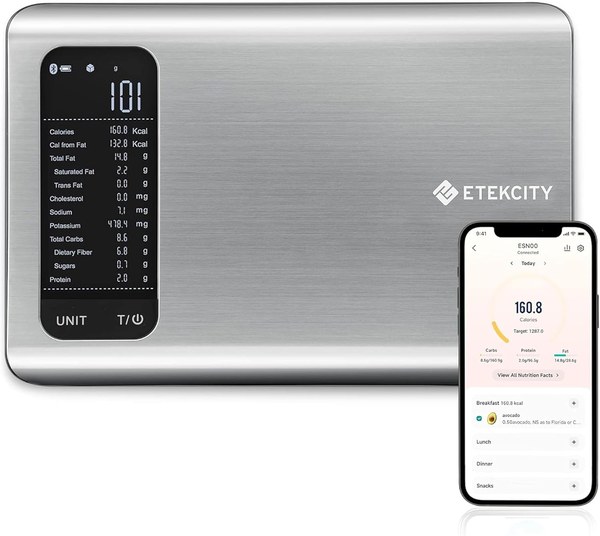 Etekcity Smart Nutrition Food Scale — the starting tool for turning every gram target into real portions.
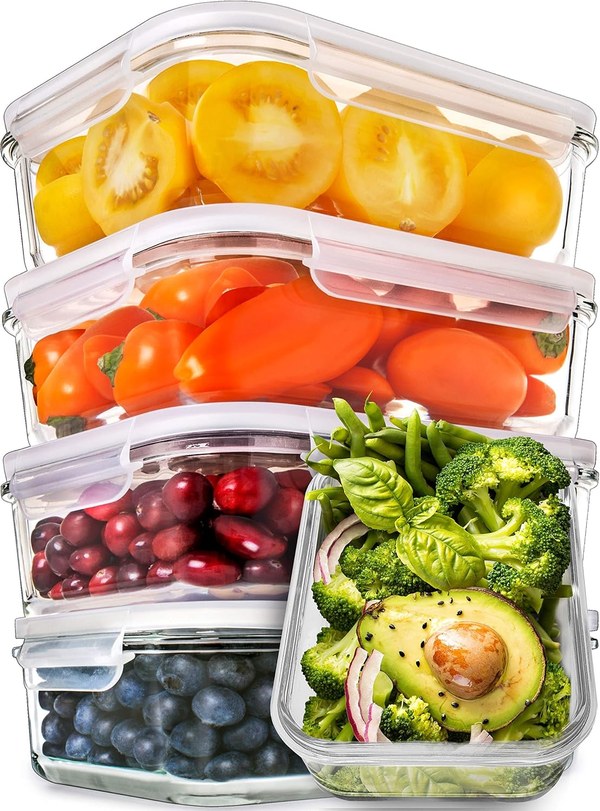 Prep Naturals Glass Meal Prep Containers (30oz, 5-Pack) — portion out the meals this guide walks you through.
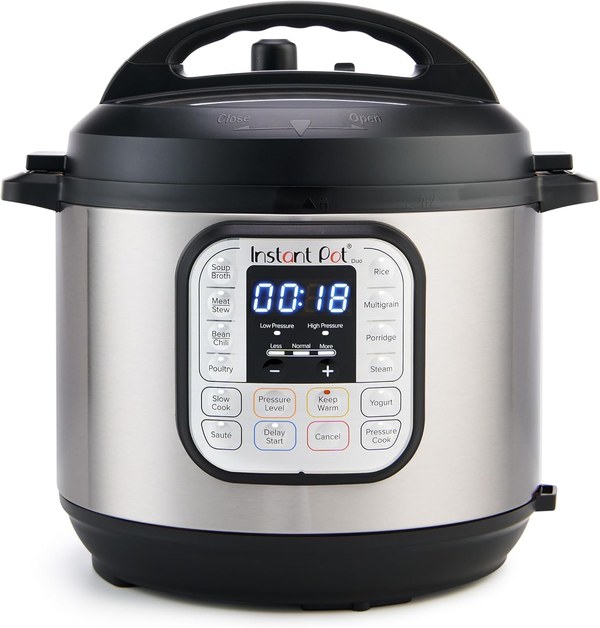 Instant Pot Duo 7-in-1 (6 Quart) — batch-cooks the proteins and carbs behind any plan.
Disclosure: as an Amazon Associate we earn from qualifying purchases. Prices are current as of writing and may change.