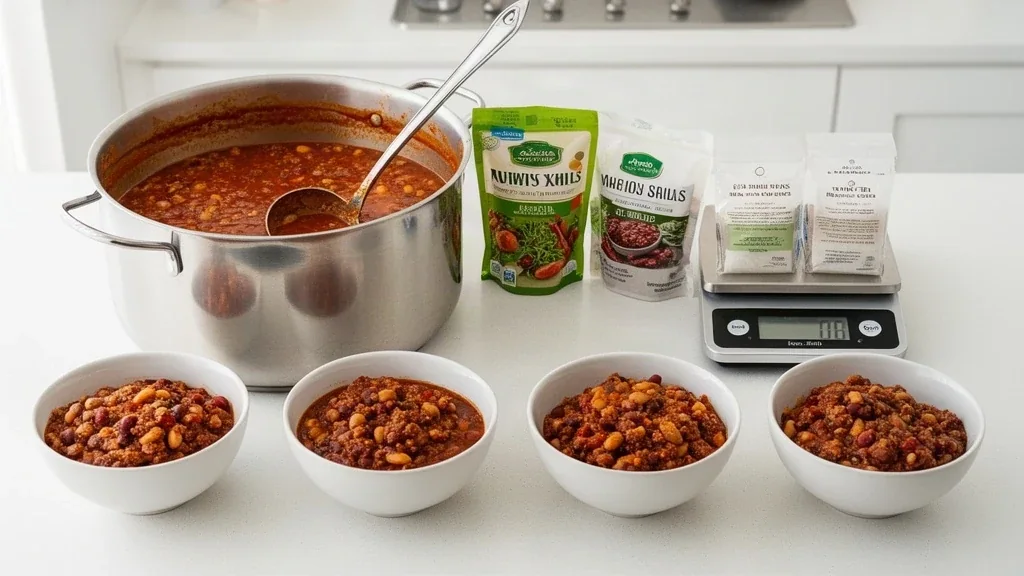
How to Count Macros in Homemade Recipes: The Yield Formula
Tracking macros for a single grilled chicken breast and a cup of rice is simple arithmetic. Tracking macros for a six-quart pot of turkey chili, a multi-layer lasagna, or a slow-cooked beef stew feels like guesswork.
Most people either guess a serving size, pick a random generic entry in a tracking database, or abandon home cooking entirely during a fat-loss phase. None of those are necessary.
To calculate exact per-serving macros for any homemade multi-ingredient recipe, you need one universal formula based on raw ingredient sums and final cooked weight:
Serving Macro = Total Raw Recipe Macro × ( Weight of Your Portion in Grams / Total Cooked Batch Weight in Grams )
Here is the exact step-by-step workflow, the mathematics of moisture loss, and a fully worked batch cooking example you can replicate in your own kitchen.
Why Counting Cooked Recipes Fails Without a Formula
When you cook food, water evaporates or absorbs. Cooking changes the weight and physical volume of food dramatically, but it does not change the total protein, carbohydrates, or fats contained in those ingredients (barring rendered fat discarded from the pan).
Consider 500 grams of raw 93/7 lean ground beef:
- Raw: 500g yields 105g protein, 0g carbs, 35g fat (735 kcal).
- Cooked (simmered in chili): Water evaporates. The finished beef might weigh 375g.
- The macros remain identical: That 375g pile of cooked meat still contains 105g protein, 0g carbs, and 35g fat.
If you scoop out 150g of that cooked beef and log it as “150g raw ground beef,” you will undercount your protein and calories by approximately 25%.
When multiple ingredients (vegetables, grains, liquids, meats, and oils) simmer together, water loss is uneven. A finished casserole or soup is a homogenous mixture of macronutrients suspended in a variable amount of water.
The only way to track individual servings accurately is to measure the raw ingredients going in and the total gram weight coming out.
The 5-Step Batch Recipe Macro Protocol
Precision Food Weighing & Macro Tracking Checklist
- Always weigh meats and grains raw before moisture shifts occur during cooking.
- Use the digital tare function to zero out bowls before adding high-density fats or nut butters.
- Cross-check packaged nutrition labels against the Atwater formula: (4 x P) + (4 x C) + (9 x F) = Total Calories.
Macro arithmetic verified against USDA FoodData Central and Atwater 4P+4C+9F standard.
BATCH RECIPE CALCULATION PROTOCOL
| Step 1 | Weigh every ingredient RAW on a digital gram scale. |
|---|---|
| Step 2 | Sum the total batch Protein, Carbs, Fat, and Calories. |
| Step 3 | Cook the dish in your pot, pan, or baking dish. |
| Step 4 | Weigh the FINISHED dish in grams (subtract the tare weight). |
| Step 5 | Log your portion: (Your Grams / Total Cooked Grams) × Batch. |
Step 1: Weigh Every Raw Ingredient
Before anything touches heat, place a bowl or cutting board on your digital food scale, tare it to zero, and record the raw weight in grams for every ingredient:
- Meat, poultry, seafood (raw weight)
- Grains, rice, pasta, oats (dry weight)
- Cooking oils, butter, butter sprays (grams, not tablespoons)
- Vegetables, beans, legumes (drained or raw weights)
- Sauces, pastes, broth, dairy, and cheeses
Note: Salt, black pepper, dry spices, garlic powder, and fresh herbs carry negligible macronutrients and do not need individual gram logging unless used in massive quantities (e.g., spice rubs with heavy brown sugar).
Step 2: Sum the Total Recipe Macros
Add the macronutrients of all raw ingredients together to establish the Total Batch Pool:
- Total Batch Protein (g)
- Total Batch Carbohydrates (g)
- Total Batch Dietary Fats (g)
- Total Batch Calories (4P + 4C + 9F)
Step 3: Cook the Dish
Simmer, bake, sauté, or slow-cook your meal normally.
Step 4: Weigh the Total Cooked Batch (The Tare Step)
Once cooking is complete, you must weigh the final yield. There are two simple methods:
- The Pre-Weighed Pot Method (Easiest): Weigh your empty cooking pot or casserole dish before cooking and write that number down (e.g., “Dutch oven = 2,450g”). When cooking finishes, place the entire hot pot on the scale. Subtract the pot’s tare weight: Total Cooked Weight = Total Scale Weight - Empty Pot Weight
- The Transfer Method: Place a large storage container or serving bowl on the scale, tare it to zero, and pour the entire finished recipe into the container.
Step 5: Calculate Macros Per Gram or Per Serving
Divide the total batch macros by the total cooked batch weight in grams. This gives you the macronutrient density per 1 gram of finished food:
Protein per Gram = Total Batch Protein (g) / Total Cooked Weight (g)
When you serve yourself a 380g bowl of the chili: Your Meal Protein = 380g × Protein per Gram
Worked Example: High-Protein Turkey Sweet Potato Chili
Let’s walk through a real 4-serving batch of turkey sweet potato chili.
1. Raw Ingredient Macro Breakdown
All ingredients weighed raw and verified via USDA FoodData Central:
| Ingredient | Raw Weight | Protein (g) | Carbs (g) | Fat (g) | Calories |
|---|---|---|---|---|---|
| 93/7 Lean Ground Turkey | 680g (24 oz) | 136g | 0g | 48g | 976 kcal |
| Olive Oil (for sautéing) | 14g (1 tbsp) | 0g | 0g | 14g | 126 kcal |
| Diced Yellow Onion | 200g | 2g | 18g | 0g | 80 kcal |
| Diced Sweet Potato | 400g | 6g | 84g | 0g | 360 kcal |
| Black Beans (canned, rinsed) | 260g (1 can) | 18g | 56g | 2g | 314 kcal |
| Diced Tomatoes (canned) | 400g (1 can) | 4g | 16g | 0g | 80 kcal |
| Low-Sodium Chicken Broth | 480g (2 cups) | 6g | 2g | 0g | 32 kcal |
| Tomato Paste | 60g (2 tbsp) | 3g | 12g | 0g | 60 kcal |
| Total Raw Batch | 2,494g | 175g | 188g | 64g | 2,028 kcal |
Macronutrient arithmetic check: (175 × 4) + (188 × 4) + (64 × 9) = 700 + 752 + 576 = 2,028 kcal
2. Cooking and Measuring Final Yield
- Weight of empty Dutch oven: 2,150g
- Weight of Dutch oven + finished hot chili: 4,100g
- Total Cooked Batch Weight: 4,100g - 2,150g = 1,950g
Notice that during 45 minutes of simmering, the recipe lost 544 grams of water weight (2,494g → 1,950g), concentrating the nutrients.
3. Calculating Macro Density Per 100g
Divide total batch numbers by 1,950g and multiply by 100:
| Macro | Calculation | Value per 100g Cooked |
|---|---|---|
| Protein | (175g / 1,950) × 100 | 8.97g |
| Carbohydrates | (188g / 1,950) × 100 | 9.64g |
| Dietary Fat | (64g / 1,950) × 100 | 3.28g |
| Calories | (2,028 / 1,950) × 100 | 104 kcal |
4. Serving the Dish
Suppose you want a substantial dinner bowl weighing 450 grams:
- Protein: 4.50 × 8.97g = 40.4g (rounds to 40g)
- Carbs: 4.50 × 9.64g = 43.4g (rounds to 43g)
- Fat: 4.50 × 3.28g = 14.8g (rounds to 15g)
- Calories: (40 × 4) + (43 × 4) + (15 × 9) = 160 + 172 + 135 = 467 kcal
Whether you eat 250 grams for a light lunch or 600 grams post-workout, you simply multiply your bowl’s weight by the per-gram ratio.
Method Comparison: Even Division vs. Gram Weighing
You have two practical ways to divide batch recipes into daily portions.
PORTIONING METHOD COMPARISON
| Feature | Equal Container | Gram-by-Gram (Scale) |
|---|---|---|
| Best For | Casseroles, | Soups, chilis, curries, |
| meal-prep trays | stir-fries, slow cooker meals | |
| Precision | Moderate (±10%) | High (Exact to the gram) |
| Flexibility | Fixed portion | Eat any custom serving size |
| Multi-Person Sharing | Poor | Excellent |
Method A: The Equal Container Division (Fastest for Meal Prep)
If you cook exclusively for yourself and plan to eat the entire dish over four days:
- Divide the total batch raw macros by your number of meal containers (e.g., 4).
- Distribute the food visually or by ladle into 4 identical glass containers.
- Over the course of the week, you will consume 100% of the batch macros regardless of minor day-to-day serving variances.
Method B: The Single-Gram Yield Method (Essential for Families and Variable Appetites)
If you share cooking with a partner, family members, or children—or if your workout days require bigger portions than rest days:
- Set the total recipe yield in your tracking app as the final cooked weight in grams (e.g., “1,950 servings of 1 gram”).
- Log the exact number of grams you scoop into your bowl (e.g., “350 servings”).
- Family members can eat whatever portion they want without disrupting your tracking.
Moisture Loss Reference Table for Common Foods
When batch cooking separate proteins, grains, and starches, use these empirical cooked-to-raw yield ratios as reference benchmarks:
| Food Item | Raw Weight | Expected Cooked Weight | Weight Change | Primary Cause |
|---|---|---|---|---|
| Boneless Chicken Breast | 100g raw | ~75g – 80g cooked | -20% to -25% | Water evaporation |
| 90/10 Ground Beef | 100g raw | ~70g – 75g cooked | -25% to -30% | Water loss + rendered fat |
| White / Jasmine Rice | 100g dry | ~280g – 300g cooked | +180% to +200% | Water absorption |
| Rolled Oats | 100g dry | ~250g – 300g cooked | +150% to +200% | Liquid absorption |
| Dry Pasta | 100g dry | ~220g – 240g cooked | +120% to +140% | Water absorption |
| Russet / Sweet Potato | 100g raw | ~85g – 90g baked | -10% to -15% | Steam loss |
Source: USDA FoodData Central Foundation Database benchmarks. Cooking times, temperatures, and equipment will cause minor variations.
4 Common Mistakes in Homemade Recipe Tracking
1. Forgetting Sautéing and Pan-Lube Oils
A single tablespoon of olive oil, avocado oil, or butter adds 14 grams of fat and 126 calories. Pouring oil freely from the bottle without placing the bottle on a scale can easily add 300 untracked calories to a batch recipe. Always weigh cooking oils on the scale.
2. Grazing and “Chef Tastes” During Prep
Sampling three bites of seasoned ground beef, half a cup of pasta sauce, and a chunk of cheese during cooking easily tallies 150 to 250 unlogged calories. Either log a modest allowance or resist tasting until the finished dish is weighed.
3. Measuring by Volume (Cups and Spoons) Instead of Mass
A “cup” of raw diced sweet potatoes can weigh anywhere from 130g to 200g depending on how tightly packed the pieces are. A digital scale accurate to 1 gram eliminates volumetric packing errors entirely.
4. Not Accounting for Bones and Inedible Waste
If cooking bone-in chicken thighs or bone-in roasts, weigh the bone waste after eating and subtract it from the raw weight before logging, or use USDA entries specifically indexed for “bone-in, yield of edible meat.”
To avoid other common tracking errors, read our guide on macro tracking mistakes and how to fix them.
Fitting Batch Recipes Into Your Daily Macro Plan
Once you know the per-100g macros of your batch recipe, you can reverse-engineer the rest of your daily meals around it.
For instance, if your dinner is 450g of Turkey Sweet Potato Chili (40g P / 43g C / 15g F / 467 kcal) and your daily goal is 160g Protein, 200g Carbs, 60g Fat (1,980 kcal):
-
Subtract your planned dinner from your daily target:
- Remaining Protein: 160 - 40 = 120g
- Remaining Carbs: 200 - 43 = 157g
- Remaining Fat: 60 - 15 = 45g
- Remaining Calories: 1,980 - 467 = 1,513 kcal
-
Fill Breakfast, Lunch, and Snacks to hit those exact remaining numbers.
To see verified meal options that match your remaining targets in seconds, input your numbers into our Macro Meal Planner.
Evidence and Data Sources
- USDA FoodData Central. Standard Reference Legacy and Foundation Foods for Poultry, Beef, Grains, and Produce. fdc.nal.usda.gov.
- Jäger R., et al. (2017). International Society of Sports Nutrition Position Stand: protein and exercise. Journal of the International Society of Sports Nutrition, 14(1), 20.
- Morton R. W., et al. (2018). A systematic review, meta-analysis and meta-regression of the effect of protein supplementation on resistance training-induced gains in muscle mass and strength in healthy adults. British Journal of Sports Medicine, 52(6), 376–384.
Tools That Make This Easier
A few tools remove the guesswork from the math above:
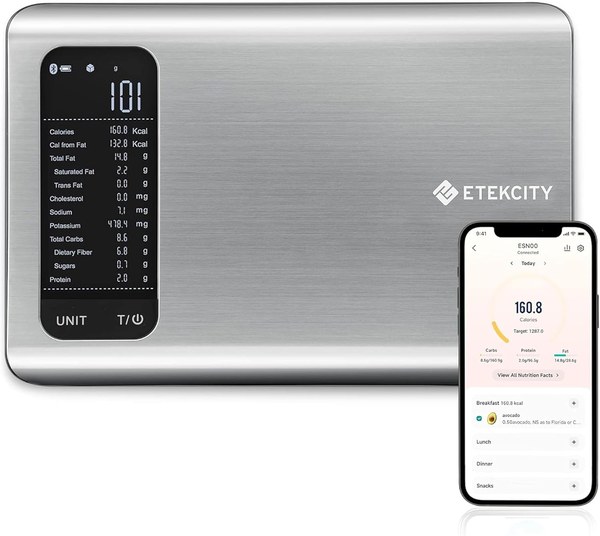 Etekcity Smart Nutrition Food Scale — weighs every raw ingredient so the yield math comes out right.
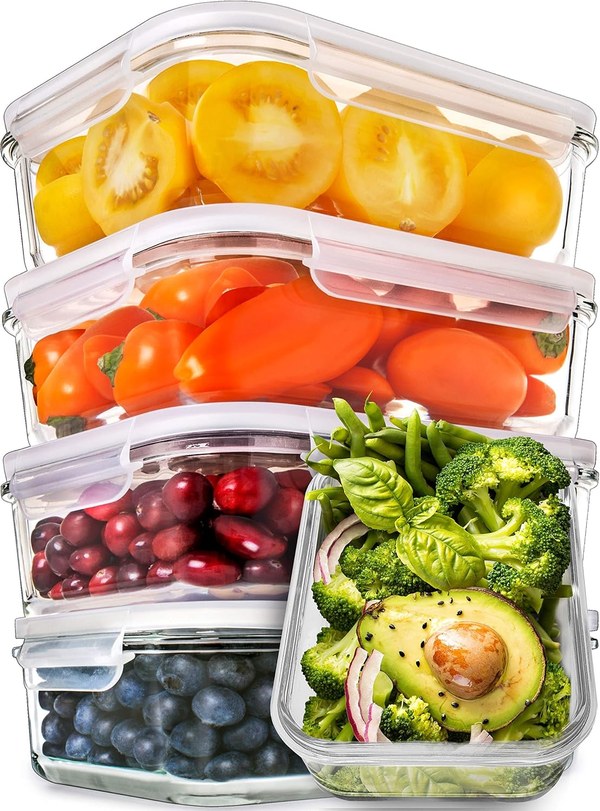 Prep Naturals Glass Meal Prep Containers (30oz, 5-Pack) — divides the finished recipe into equal, measured servings.
Disclosure: as an Amazon Associate we earn from qualifying purchases. Prices are current as of writing and may change.