Bulking Macros: How to Calculate a Clean Surplus for Lean Muscle Growth
To build muscle without adding excessive body fat, set a daily calorie surplus of 250 to 400 calories above maintenance (roughly a 10% to 15% increase). This energy surplus provides the fuel required for muscle protein synthesis and intense training while limiting fat storage.
For a 175-pound lifter with a maintenance baseline of 2,500 calories, the optimal lean bulking target is 2,800 calories per day, distributed as:
- Protein: 175g (0.8–1.0g per pound of body weight / 700 kcal)
- Fats: 78g (0.4–0.5g per pound of body weight / 702 kcal)
- Carbohydrates: 350g (the remaining balance / 1,400 kcal)
Here is the complete step-by-step framework to calculate your individual surplus, structure your meals with whole foods, and adjust your macros as your scale weight changes.
The Math Behind a Controlled Lean Surplus
Muscle tissue is metabolically expensive to synthesize. Research on resistance-trained individuals indicates that while an energy surplus accelerates muscle hypertrophy, the human body has an upper limit on how quickly it can build skeletal muscle (Slater et al. 2019).
Consuming a massive surplus (often called a “dirty bulk” of 800–1,000+ extra calories) does not force muscle to grow faster. Instead, surplus calories beyond the rate of muscle synthesis are stored directly in adipose tissue.
A controlled trial by Garthe et al. (2011) compared athletes gaining weight slowly (~0.7% body weight gain per month) versus rapidly. The slower surplus group gained nearly identical muscle mass while accumulating significantly less body fat.
Target Rate of Scale Weight Gain
Use these weekly weight gain targets to verify that your surplus is driving muscle growth rather than unnecessary fat gain:
| Training Experience | Target Weight Gain per Week | Target Weight Gain per Month | Focus |
|---|---|---|---|
| Beginner (Year 1) | 0.5 – 1.0 lb (0.25 – 0.5 kg) | 2.0 – 4.0 lb | Rapid neuromuscular adaptation, high muscle potential |
| Intermediate (Years 2–4) | 0.25 – 0.5 lb (0.1 – 0.25 kg) | 1.0 – 2.0 lb | Steady hypertrophy with minimal adipose gain |
| Advanced (5+ Years) | 0.1 – 0.25 lb (0.05 – 0.1 kg) | 0.5 – 1.0 lb | Marginal gains; very tight surplus required |
Step-by-Step: Calculate Your Bulking Macros
Evidence-Based Muscle Growth & Recovery Benchmarks
- Consume 1.6 to 2.2g protein per kg of body weight (0.73 to 1.0g per pound) spread over 3-4 daily meals.
- Take 3-5g pure creatine monohydrate daily to saturate intramuscular phosphocreatine reserves.
- Maintain progressive overload resistance training while supporting energy balance with complex starches.
Macro arithmetic verified against USDA FoodData Central and Atwater 4P+4C+9F standard.
Calculating your target macros requires four sequential steps: establishing maintenance, adding the surplus, fixing protein and fat floors, and filling the remaining calories with carbohydrates.
Total Daily Calories = Maintenance (TDEE) + 250 to 400 kcal
1. Protein: 0.8 – 1.0g per lb of body weight (4 kcal per gram)
2. Fat: 0.35 – 0.5g per lb of body weight (9 kcal per gram)
3. Carbohydrates: [Total Calories - (Protein kcal + Fat kcal)] / 4 kcal per gram
1. Find Your Baseline Maintenance (TDEE)
Track your daily food intake and body weight for two weeks. If your average weight remains unchanged over 14 days, your average daily calorie intake is your true maintenance level (Total Daily Energy Expenditure, or TDEE). If you are starting fresh, multiply your body weight in pounds by 14–16 depending on daily activity.
2. Add the Surplus (+250 to +400 kcal)
- Beginners or leaner individuals (under 12% body fat for men, under 20% for women): Add 350–400 kcal.
- Intermediates or individuals prone to rapid fat gain: Add 250–300 kcal.
3. Set Protein at 0.8–1.0g Per Pound
A comprehensive meta-analysis by Morton et al. (2018) evaluating 49 studies found that protein intakes beyond 1.62g per kilogram (roughly 0.74g per pound) provide no additional benefit for muscle size during resistance training. Setting your intake between 0.8g and 1.0g per pound provides an optimal safety margin.
4. Set Dietary Fat at 20–30% of Total Calories (0.35–0.5g/lb)
Dietary fat supports hormone production, including testosterone, and provides essential fatty acids. Keep fat between 0.35g and 0.5g per pound (roughly 20% to 30% of total daily energy). Dropping below 15–20% of calories from fat can impair endocrine function.
5. Fill Remaining Calories with Carbohydrates
Carbohydrates are your primary fuel for high-intensity muscular contractions. Glycogen availability directly supports training volume and reduces muscle protein breakdown during workouts (Burke et al. 2011). Subtract your protein calories and fat calories from your total target; divide the remaining calories by 4 to get your carb grams.
Worked Example: 175-Pound Intermediate Lifter
Let’s calculate the exact bulking macros for a 175-pound lifter with a maintenance baseline of 2,500 calories:
- Total Calorie Target: 2,500 kcal + 300 kcal surplus = 2,800 kcal
- Protein (1.0g/lb): 175g × 4 kcal/g = 700 kcal
- Fat (0.45g/lb): 78g × 9 kcal/g = 702 kcal
- Carbohydrate Remainder: 2,800 kcal - (700 + 702) = 1,398 kcal / 4 kcal/g = 350g carbs (1,400 kcal)
Daily Macro Breakdown:
Calories: 2,802 kcal | Protein: 175g (25%) | Carbs: 350g (50%) | Fats: 78g (25%)
Sample Full-Day Meal Plan (2,800 Calories)
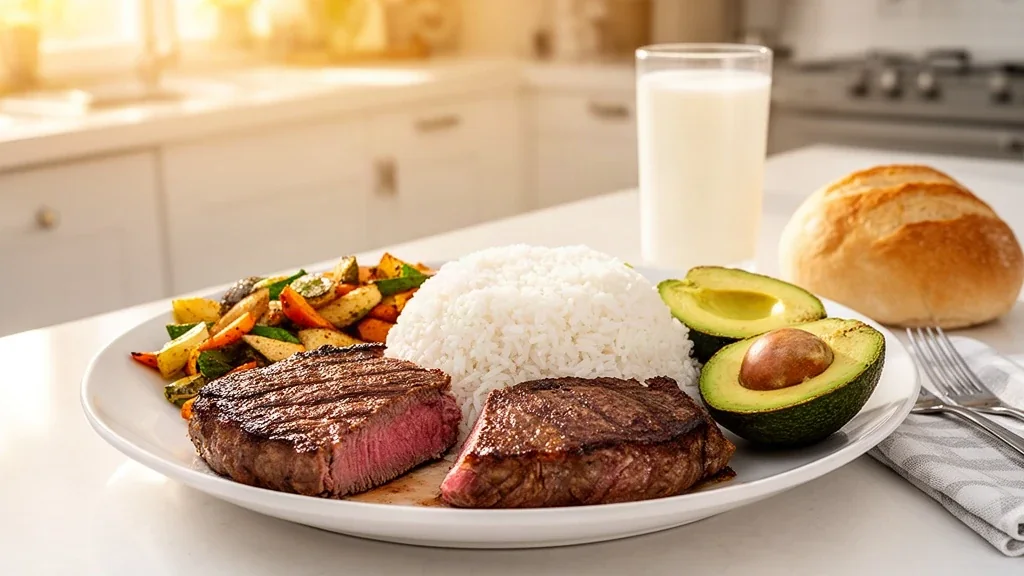
Here is how those 2,800 calories look on a plate across four balanced meals using whole foods. All nutrient numbers conform to standard 4/4/9 calorie values (4 calories per gram of protein and carbohydrate, 9 calories per gram of fat).
| Meal | Foods & Ingredients | Protein (g) | Carbs (g) | Fats (g) | Calories |
|---|---|---|---|---|---|
| Breakfast | Steak and Eggs (4oz flank + 2 eggs) + 1.5 cups cooked Oatmeal with 1 banana & 1 tbsp honey | 47 | 68 | 24 | 676 |
| Lunch | Chicken Teriyaki + Brown Rice + Edamame + 1 medium apple | 44 | 83 | 10 | 598 |
| Pre/Post Workout | Greek Yogurt Bowl + Berries + Granola + 1 scoop Whey Protein | 44 | 47 | 9 | 445 |
| Dinner | BBQ Chicken Pizza (3 slices) + Mixed green salad with 1 tbsp olive oil | 40 | 82 | 32 | 776 |
| Bedtime Snack | 1 slice whole wheat toast + 1 tbsp peanut butter + 1 cup 1% milk | 14 | 35 | 11 | 295 |
| Total | 189g | 315g | 86g | 2,790 |
Note: Minor variations in grocery brands, raw versus cooked meat weights, and cooking oils will shift daily totals slightly. Treat food database entries as close working estimates.
Clean Bulking vs. Dirty Bulking: The Reality
A common mistake in muscle-building phases is treating a bulk as an excuse to consume unlimited processed food. Here is how nutrient composition and surplus size impact body composition:
| Factor | Clean Lean Bulk (+300 kcal) | Dirty Bulk (+1,000+ kcal) |
|---|---|---|
| Primary Muscle Gain | Maximal (limited by biological synthesis rate) | Identical to clean bulk |
| Monthly Fat Gain | 0.5 – 1.5 lbs | 4.0 – 8.0+ lbs |
| Training Performance | High (stable blood glucose, minimal digestive distress) | Variable (lethargy, blood sugar crashes) |
| Subsequent Cut Duration | 4 – 8 weeks | 16 – 24+ weeks (risks losing muscle on long cuts) |
| Metabolic Health | Preserved blood pressure, lipids, and insulin sensitivity | Elevated blood pressure, worsening lipid profile |
Practical Food Swaps for Bulking
When eating in a calorie surplus, some individuals struggle with feeling overly full, while others experience excessive hunger. Use these food swaps to adjust digestion and satiety while keeping your macros on target:
Swaps for Better Digestion & Less Fullness (High Calorie Density)
- Swap brown rice for white jasmine rice: White rice digests faster and reduces fullness before training sessions.
- Swap raw whole oats for cream of rice or oat flour: Faster gastric emptying allows you to hit high carb numbers without stomach heaviness.
- Swap dry chicken breast for 93/7 lean ground beef or salmon: Adds calorie-dense fats and micronutrients like zinc and iron.
- Add liquid calories: Blend fruit, whey protein, peanut butter, and milk into a post-workout shake.
Swaps for Appetite Control (High Satiety)
- Swap white rice for boiled baby potatoes: Boiled potatoes score highest on the clinical satiety index.
- Swap liquid shakes for solid whole foods: A bowl of nonfat Greek yogurt with sliced berries takes longer to chew and digest.
- Add high-volume fibrous vegetables: Broccoli, green beans, and zucchini add micronutrients and plate volume without driving up calorie counts.
| Want to Adjust | Recommended Food Swap | Macro Impact |
|---|---|---|
| +30g Carbohydrates | Add 1.5 cups cooked white rice or 1 large banana | +30g Carbs, +0g Fat, +120 kcal |
| +20g Protein | Add 1 can tuna or 1 cup nonfat Greek yogurt | +20–24g Protein, 0g Fat, +100 kcal |
| +15g Healthy Fats | Add 1 oz almonds or 1/2 medium avocado | +15g Fat, +4g Carbs, +151 kcal |
| -200 Calories | Switch 80/20 beef to 93/7 ground turkey | -15g Fat, -135 kcal |
When and How to Adjust Your Surplus
Do not adjust your calories daily. Body weight fluctuates by 1 to 4 pounds due to water retention, sodium intake, bowel transit time, and muscle glycogen storage.
- Weigh yourself every morning after using the restroom and before eating or drinking.
- Calculate your 7-day rolling average at the end of each week.
- Compare weekly averages across 3 to 4 weeks:
- Weight is completely flat (<0.1 lb gain over 3 weeks): Increase daily calories by 150–200 kcal (add ~40–50g carbs).
- Weight is gaining at target rate (0.25–0.5 lb/week for intermediates): Make no changes. Keep executing.
- Weight is increasing too quickly (>1.0 lb/week for intermediates): Reduce daily calories by 150–200 kcal (remove ~15–20g fats or ~40g carbs).
Common Bulking Mistakes to Avoid
1. Panicking at Water Weight in Week One
When you increase carbohydrate intake from maintenance, each gram of stored muscle glycogen pulls approximately 3 to 4 grams of water into the muscle cell (Burke et al. 2011). Seeing the scale jump 2 to 4 pounds in the first week of a surplus is normal fluid retention, not instant fat storage.
2. Pushing Protein Unnecessarily High (Over 1.2g/lb)
Eating 250g of protein when you weigh 160 pounds does not accelerate growth. Protein has a high thermic effect (burning 20–30% of its calories in digestion) and strong satiety signals. Excess protein crowds out carbohydrates, which are far more effective at fueling resistance training. For more on protein utilization limits, see our breakdown of protein per meal science.
3. Bulking from an Unfavorable Body Fat Baseline
If you start a bulking phase at a high body fat percentage (over 18–20% for men or 28–30% for women), reduced insulin sensitivity can tilt nutrient partitioning toward fat storage rather than muscle gain. In this scenario, spending 8–12 weeks in a moderate cut or a recomposition phase is the smarter move before entering a surplus. Learn how this works in our guide on recomposition in a deficit.
4. Ignoring Meal Timing Around Workouts
While total daily energy balance dictates 80% of your progress, placing 25–40% of your daily carbohydrate intake within the 2 to 3 hours before and after your training session ensures maximal glycogen availability and muscle recovery. Read our detailed guide on meal timing for muscle growth.
Plan Your Bulking Meals
Instead of guessing your portions or eating the same repetitive foods every day, use our calculator to reverse-engineer meal plans that match your exact bulking targets.
Enter your target calories, protein, carbs, and fats into the Macro Meal Reverser to generate balanced, whole-food meal combinations with verified macro totals.
Tools That Make This Easier
A few tools remove the guesswork from the math above:
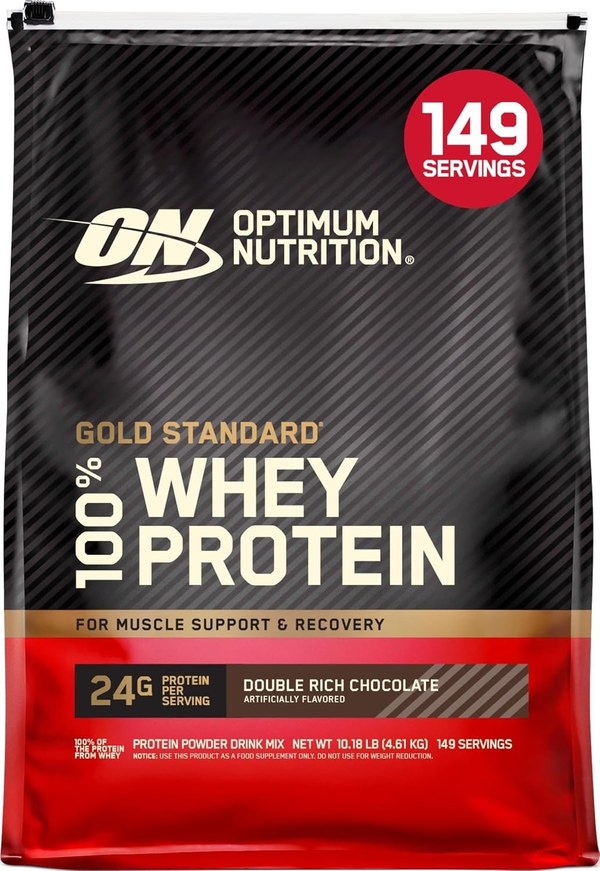 Optimum Nutrition Gold Standard 100% Whey (5 lb) — adds easy calories and protein to hit a clean surplus.
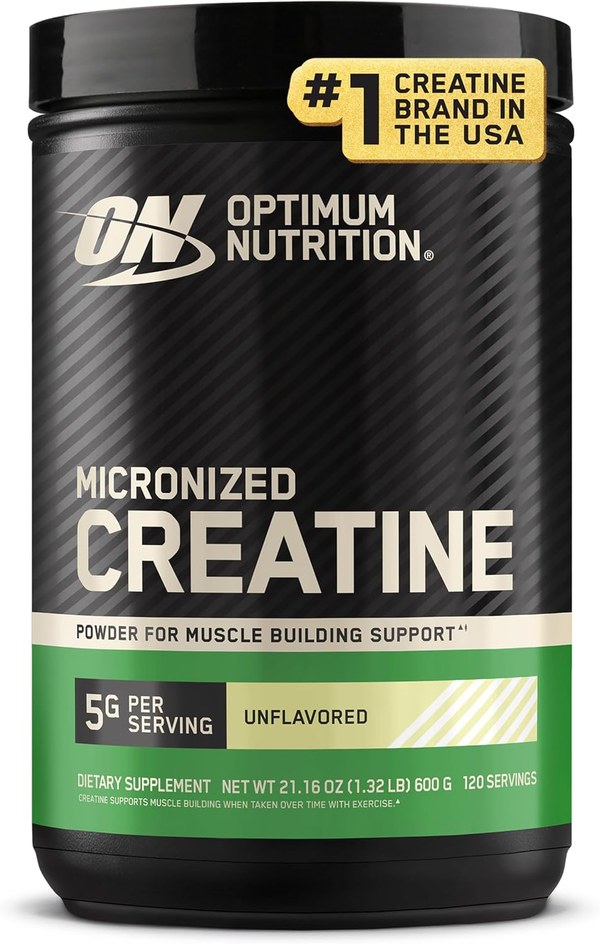 Optimum Nutrition Micronized Creatine Monohydrate — the researched ergogenic aid for the strength side of a bulk.
 Instant Pot Duo 7-in-1 (6 Quart) — cooks bulk rice and meat for the extra meals a surplus demands.
Disclosure: as an Amazon Associate we earn from qualifying purchases. Prices are current as of writing and may change.