
Body Recomposition Macros: How to Build Muscle and Lose Fat Simultaneously
Traditional bodybuilding doctrine insisted on a strict binary: you must either “bulk” in a calorie surplus to gain muscle while accepting fat gain, or “cut” in a steep deficit to lose fat while risking muscle loss.
Sports nutrition science has thoroughly disproven this myth. Body recomposition—the simultaneous increase in skeletal muscle mass alongside a reduction in adipose tissue—is an empirically verified phenomenon occurring across diverse populations under specific nutritional and training conditions.
Building muscle requires energy, amino acids, and a progressive mechanical stimulus. When overall dietary energy intake is kept near maintenance or in a slight deficit, the body can mobilize endogenous energy stores (stored body fat) to fuel the costly process of muscle protein synthesis—provided dietary protein and resistance training are optimized.
Here is how to determine if you are a candidate for body recomposition, the precise macronutrient formula to set your targets, and a complete day of verified meals.
The Short Answer: Who Can Recompose?
Body recomposition does not occur equally for everyone. Eligibility depends on training age, baseline body fat percentage, and current anabolic sensitivity.
RECOMPOSITION CANDIDATE PROFILES
| Candidate Category | Recomp Potential | Optimal Energy Balance |
|---|---|---|
| 1. Untrained Beginner | Very High | 10% – 15% Calorie Deficit |
| 2. Returning Lifter | High | Maintenance (TDEE) |
| 3. Elevated Body Fat | High | 15% – 20% Calorie Deficit |
| 4. Sub-Optimal Trainee | Moderate | 5% – 10% Calorie Deficit |
| 5. Advanced Lean Pro | Low / Inefficient | Targeted Surplus or Cut |
1. Untrained Beginners (The “Newbie Gains” Window)
If you have less than 6 to 12 months of structured resistance training, your neuromuscular system has heightened sensitivity to mechanical tension. Beginners can add significant contractile muscle mass even while sustaining a moderate caloric deficit.
2. Detrained Lifters (Muscle Memory)
Individuals who previously built muscle but took time off due to injury or lifestyle changes retain cellular adaptations, specifically increased myonuclei count within muscle fibers. When returning to training, myonuclear domain expansion allows rapid muscle re-growth alongside fat loss at maintenance calories.
3. Individuals with Elevated Body Fat (>20% Men, >30% Women)
Adipose tissue is stored chemical energy. A person with 40+ pounds of stored fat has hundreds of thousands of surplus calories internally available to supply the energetic cost of muscle synthesis, even in a daily dietary deficit of 300 to 500 calories.
4. Sub-Optimally Trained Lifters
People who have “lifted for years” but without progressive overload, tracking macros, or eating sufficient protein. Fixing these variables acts as a new training stimulus.
5. Who Should NOT Attempt Recomposition?
Lean, advanced natural lifters (men under 10–12% body fat, women under 18–20%) already near their genetic ceiling. For advanced trainees, the rate of muscle synthesis is slow enough that dedicated mass phases (a modest surplus of 200–300 kcal) and cutting phases yield superior efficiency.
What the Sports Science Proves
Evidence-Based Muscle Growth & Recovery Benchmarks
- Consume 1.6 to 2.2g protein per kg of body weight (0.73 to 1.0g per pound) spread over 3-4 daily meals.
- Take 3-5g pure creatine monohydrate daily to saturate intramuscular phosphocreatine reserves.
- Maintain progressive overload resistance training while supporting energy balance with complex starches.
Macro arithmetic verified against USDA FoodData Central and Atwater 4P+4C+9F standard.
The landmark systemic review by Barakat et al. (2020) in the Strength and Conditioning Journal analyzed dozens of clinical studies across untrained, recreationally trained, and elite athlete cohorts. The authors concluded:
“Despite the common belief that building muscle and losing fat at the same time is only possible in untrained populations, a substantial body of evidence demonstrates body recomposition occurring in resistance-trained individuals.”
Key scientific principles governing successful recomposition:
- High Protein Intake: Campbell et al. (2018) in the Journal of the International Society of Sports Nutrition demonstrated that resistance-trained women consuming a high-protein diet (2.5g per kg of bodyweight) lost significantly more fat mass (-1.1 kg) and gained more lean mass (+0.6 kg) over 8 weeks compared to an isoenergetic low-protein group.
- Moderate Deficit Limits: A study by Garthe et al. (2011) showed that elite athletes losing weight slowly (~0.7% of bodyweight per week) increased lean body mass by 2.1% and gained 4-rep max strength, whereas athletes losing weight rapidly (1.4% per week) lost lean mass and saw blunted strength progression.
- Progressive Overload: Resistance training must apply mechanical tension close to failure (within 1 to 3 reps in reserve) with weekly volume between 10 and 20 sets per muscle group.
The Recomposition Macro Formula
To configure your daily macronutrient targets for recomposition, follow this 4-step sequence:
Step 1: Calculate Maintenance TDEE (Total Daily Energy Expenditure)
Step 2: Set Caloric Target (Maintenance to 15% Deficit)
Step 3: Anchor Protein at 2.0g – 2.4g per kg (0.9g – 1.1g per lb)
Step 4: Distribute Dietary Fats (20–30%) and Carbohydrates (Remainder)
1. Daily Calorie Target
- If starting body fat is high (>22% men, >32% women): Set a 15% to 20% deficit below maintenance (typically -350 to -500 kcal/day).
- If starting body fat is moderate (14–20% men, 23–30% women): Set a 5% to 10% deficit below maintenance (typically -150 to -250 kcal/day) or eat at exact maintenance calories.
2. Protein Target
Set daily protein between 2.0g and 2.4g per kilogram of total bodyweight (roughly 0.9g to 1.1g per pound). High protein elevates muscle protein synthesis, increases satiety, and provides a higher thermic effect of feeding.
3. Dietary Fat Target
Set dietary fat between 20% and 30% of total daily calories (roughly 0.3g to 0.4g per pound of bodyweight) to support steroid hormone synthesis, cellular membrane integrity, and fat-soluble vitamin absorption.
4. Carbohydrate Target
Allocate all remaining daily calories to carbohydrates (Carb Grams = Remaining Calories / 4). Carbohydrates replenish muscle glycogen, driving high-intensity training performance and reducing cortisol-mediated muscle breakdown.
Worked Example A: 190 lb (86 kg) Male Beginner (24% Body Fat)
- Starting Stats: 190 lbs, 24% body fat, 3 lifting sessions weekly.
- Estimated Maintenance TDEE: 2,500 kcal/day.
- Recomp Target (12% Deficit): 2,200 kcal/day (-300 kcal deficit).
1. Protein: 190g × 4 kcal/g = 760 kcal (1.0g per lb of bodyweight)
2. Dietary Fat: 65g × 9 kcal/g = 585 kcal (~26.6% of total calories)
3. Carbohydrates: (2,200 - 760 - 585) = 855 kcal / 4 kcal/g = 214g

Daily Target: 2,200 Calories | 190g Protein | 214g Carbs | 65g Fat
Macronutrient Math: (190 × 4) + (214 × 4) + (65 × 9) = 760 + 856 + 585 = 2,201 kcal (~2,200)
Worked Example B: 150 lb (68 kg) Female Detrained Lifter (28% Body Fat)
- Starting Stats: 150 lbs, returning to gym after 8 months off.
- Estimated Maintenance TDEE: 1,950 kcal/day.
- Recomp Target (10% Deficit): 1,750 kcal/day (-200 kcal deficit).
1. Protein: 140g × 4 kcal/g = 560 kcal (0.93g per lb of bodyweight)
2. Dietary Fat: 50g × 9 kcal/g = 450 kcal (~25.7% of total calories)
3. Carbohydrates: (1,750 - 560 - 450) = 740 kcal / 4 kcal/g = 185g

Daily Target: 1,750 Calories | 140g Protein | 185g Carbs | 50g Fat
Macronutrient Math: (140 × 4) + (185 × 4) + (50 × 9) = 560 + 740 + 450 = 1,750 kcal
A Complete Day of Recomposition Meals (1,750 kcal Target)
Here is a verified 4-meal sample plan matching the 1,750 kcal / 140P / 185C / 50F profile.
Every meal strictly obeys 4P + 4C + 9F = Calories arithmetic.
1. Breakfast: Greek Yogurt Berry Bowl
- 1 cup (227g) Nonfat Plain Greek Yogurt
- 1/2 cup Fresh Mixed Berries
- 1/4 cup Low-Sugar Granola
| Macro | Quantity |
|---|---|
| Protein | 20g |
| Carbs | 45g |
| Fats | 8g |
| Calories | 332 kcal |
Macronutrient math: (20 × 4) + (45 × 4) + (8 × 9) = 80 + 180 + 72 = 332 kcal.
2. Lunch: Chicken Teriyaki with Brown Rice & Edamame
- 5 oz Grilled Teriyaki Chicken Breast
- 1 cup Cooked Brown Rice
- 1/2 cup Steamed Shelled Edamame
- Steamed Carrots & Broccoli
| Macro | Quantity |
|---|---|
| Protein | 44g |
| Carbs | 58g |
| Fats | 10g |
| Calories | 498 kcal |
Macronutrient math: (44 × 4) + (58 × 4) + (10 × 9) = 176 + 232 + 90 = 498 kcal.
3. Pre/Post-Workout Snack: Clean Protein Berry Smoothie
- 1 scoop (30g) Vanilla Whey Protein Isolate
- 1/2 cup Rolled Oats
- 1/2 cup Frozen Berries
- 1 cup Unsweetened Almond Milk
| Macro | Quantity |
|---|---|
| Protein | 35g |
| Carbs | 48g |
| Fats | 7g |
| Calories | 395 kcal |
Macronutrient math: (35 × 4) + (48 × 4) + (7 × 9) = 140 + 192 + 63 = 395 kcal.
4. Dinner: Grilled Salmon, Baked Sweet Potato & Asparagus
- 5 oz Fresh Grilled Salmon Fillet
- 1 medium Baked Sweet Potato (180g)
- 1 cup Grilled Asparagus spears
- 1 tsp Olive Oil
| Macro | Quantity |
|---|---|
| Protein | 38g |
| Carbs | 35g |
| Fats | 18g |
| Calories | 454 kcal |
Macronutrient math: (38 × 4) + (35 × 4) + (18 × 9) = 152 + 140 + 162 = 454 kcal.
Daily Macronutrient Overview
| Meal | Protein | Carbs | Fats | Total Calories |
|---|---|---|---|---|
| Breakfast: Greek Yogurt Bowl | 20g | 45g | 8g | 332 |
| Lunch: Teriyaki Chicken Bowl | 44g | 58g | 10g | 498 |
| Snack: Whey Protein Smoothie | 35g | 48g | 7g | 395 |
| Dinner: Salmon & Sweet Potato | 38g | 35g | 18g | 454 |
| Total Day | 137g | 186g | 43g | 1,679 |
Need to scale to 190g protein and 2,200 calories? Add 2 whole eggs to breakfast (+12g P, +10g F) and increase chicken breast portion at lunch to 8 oz (+18g P).
For more strategies on distributing protein across the day, see our breakdown of meal timing for muscle growth and how much protein you can absorb per meal.
How to Track Progress Without Scale Anxiety
The single biggest psychological pitfall in body recomposition is relying entirely on bathroom scale weight.
THE RECOMP SCALE PARADOX • Gained 3.0 lbs skeletal muscle • Lost 3.0 lbs subcutaneous adipose tissue • Net Scale Change: 0.0 lbs
If you only check the scale, a net zero change looks like total stagnation. In reality, your body density increased, your waistline shrunk, and your basal metabolic rate improved.
To measure recomposition accurately:
- Waist Circumference: Measure at the navel every Sunday morning unfed. A decreasing waist measurement alongside stable bodyweight confirms fat loss.
- Progressive Overload in the Gym: Track working sets in a logbook. If your 5-rep squat or 8-rep bench press weights are steadily climbing while scale weight remains flat, you are adding contractile muscle tissue.
- Standardized Progress Photos: Take photos every 3 to 4 weeks in identical lighting, posture, and time of day.
- Clothing Fit: Notice how shirts fit across shoulders and how pants fit around the waist.
4 Mistakes That Sabotage Body Recomposition
1. Creating Too Large of a Caloric Deficit
Cutting calories by 700 to 1,000 kcal/day downregulates mTOR signaling, spikes cortisol, and blunts muscle protein synthesis. Keep deficits shallow (under 350 kcal) during a recomp.
2. Prioritizing Cardio Over Heavy Resistance Training
Cardiovascular exercise improves mitochondrial health and work capacity, but mechanical tension is the non-negotiable signal for muscle hypertrophy. Do not sacrifice lifting volume for excessive cardio.
3. Insufficient Daily Protein
Eating below 1.6g/kg during an energy deficit forces the liver to convert endogenous amino acids into glucose via gluconeogenesis, degrading muscle tissue. Keep protein anchored above 2.0g/kg.
4. Frequent Program Hopping
Recomposition requires months of progressive overload on consistent movement patterns. Stick to a structured compound-lift routine for at least 12 to 16 weeks before altering exercises.
If your progress has stalled after months in a chronic deficit, you may need a structured diet break; learn more in our explainer on reverse dieting.
Calculate Your Recomposition Macros
Ready to generate custom meal combinations tailored to your bodyweight, activity level, and body recomposition goals?
Use our free Macro Meal Planner. Enter your target calories, protein, carbohydrates, and fats to immediately reverse-engineer balanced daily meals with verified macros.
Evidence and Sources
- Barakat C., et al. (2020). Body recomposition: can trained individuals build muscle and lose fat at the same time? Strength and Conditioning Journal, 42(5), 7–20.
- Campbell B. I., et al. (2018). Effects of high versus low protein intake on body composition and maximal strength in aspiring female physique athletes engaging in an 8-week resistance training program. Journal of the International Society of Sports Nutrition, 15(1), 25.
- Garthe I., et al. (2011). Effect of two different weight-loss rates on body composition and strength and power-related performance in elite athletes. International Journal of Sport Nutrition and Exercise Metabolism, 21(2), 97–104.
- Morton R. W., et al. (2018). A systematic review, meta-analysis and meta-regression of the effect of protein supplementation on resistance training-induced gains in muscle mass and strength in healthy adults. British Journal of Sports Medicine, 52(6), 376–384.
- Slater G. J., et al. (2019). Is an energy surplus required to maximize skeletal muscle hypertrophy associated with resistance training? Frontiers in Nutrition, 6, 131.
- USDA FoodData Central. Nutrient profiles for Chicken Breast (FDC 171077), Greek Yogurt (FDC 170903), Salmon (FDC 175167), and Edamame (FDC 172421). fdc.nal.usda.gov.
Tools That Make This Easier
A few tools remove the guesswork from the math above:
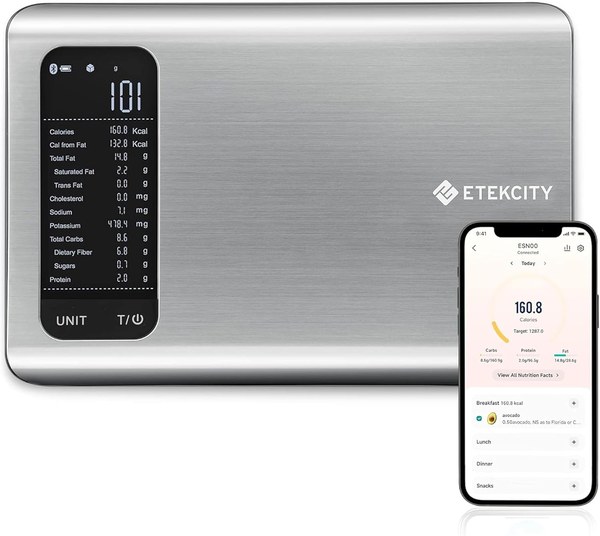 Etekcity Smart Nutrition Food Scale — weighs raw protein so recomposition macros stay exact week over week.
 Optimum Nutrition Gold Standard 100% Whey (5 lb) — hits the high protein floor of a recomposition target.
 Optimum Nutrition Micronized Creatine Monohydrate — supports strength during the maintenance-to-deficit recomp phase.
Disclosure: as an Amazon Associate we earn from qualifying purchases. Prices are current as of writing and may change.