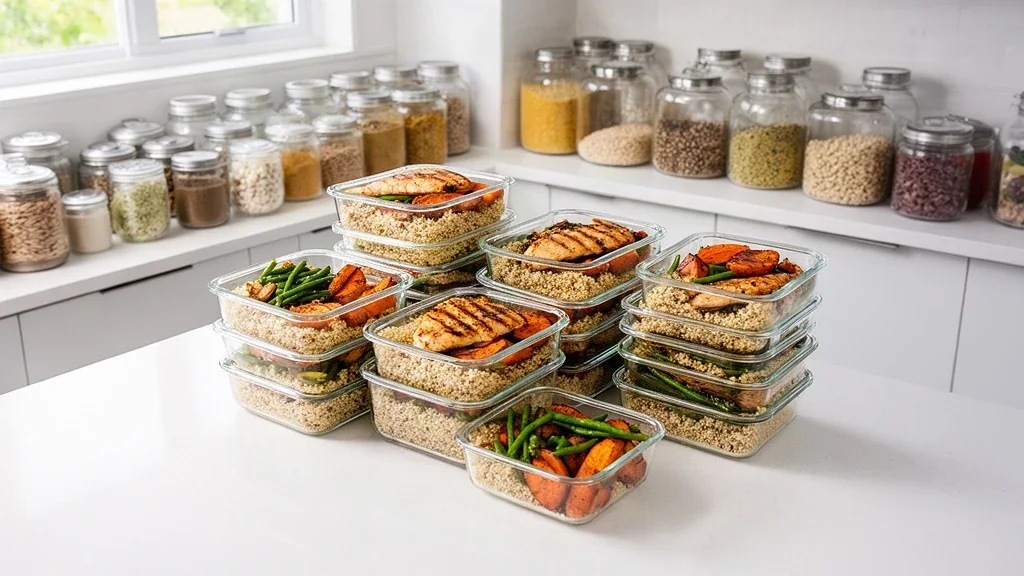
Back-to-School High-Protein Meal Prep: A 5-Day System for Busy Schedules
When the school year kicks off, daily routines tighten immediately. Between early morning school runs, commute traffic, work meetings, sports practices, and evening study sessions, personal nutrition is usually the first habit to collapse. Without ready-to-eat meals, people default to cafeteria food, drive-thru lanes, and packaged convenience snacks.
A structured 90-minute Sunday batch prep solves this entire bottleneck. By cooking proteins, starches, and roasted vegetables concurrently, you can lock in 5 days of high-protein lunches, grab-and-go breakfasts, and modular dinner foundations.
Here is the step-by-step system, the cooking math for raw-versus-cooked yields, and 5 days of verified high-protein meals.
The Short Answer: The 90-Minute Batch Matrix
Rather than cooking individual recipes sequentially, a professional prep system uses thermal zoning: operating the oven, stovetop, and countertop appliances at the same time.
THE 90-MINUTE SUNDAY TIMELINE
| Min 00 | Preheat oven to 400°F (204°C). Start Rice Cooker with grains. |
|---|---|
| Min 10 | Season Chicken Breast & Vegetables across 3 sheet pans. |
| Min 20 | Slide sheet pans into oven (25 min timer). |
| Min 30 | Assemble 5 grab-and-go Mason Jar Overnight Oats. |
| Min 45 | Pull chicken & veggies; let rest. Brown Ground Turkey on top. |
| Min 60 | Slice chicken, fluff rice, portion into 10 glass containers. |
| Min 75 | Seal containers, label days, clean kitchen prep surfaces. |
| Min 90 | Complete: 5 breakfasts, 5 lunches, and 5 dinner bases ready. |
This simple timeline produces 10 to 15 high-protein meals in an hour and a half with minimal cleanup.
The Science of Batch Cooking: Raw vs. Cooked Yield Math
Batch Meal Prep & Storage Efficiency Protocol
- Store cooked chicken breast, sweet potatoes, and rice in portioned glass containers for up to 4 days.
- Freeze meals for days 5-7 in airtight vacuum-sealed bags to eliminate ice crystallization.
- Batch-chop high-volume vegetables (peppers, onions, broccoli) in bulk to save 30+ minutes weekly.
Macro arithmetic verified against USDA FoodData Central and Atwater 4P+4C+9F standard.
The biggest mistake in batch meal prep is calculating macros from raw ingredients on the grocery scale, then logging arbitrary cooked portions into your tracker. Cooking alters moisture content and fat volume significantly, while total protein remains largely constant.
According to the USDA Table of Cooking Yields (Agricultural Research Service), standard kitchen proteins experience predictable thermal shrinkage:
Cooked Weight Yield = Raw Weight × (1 - Shrinkage Percentage)
| Protein / Starch Item | Raw Weight | Expected Thermal Shrinkage | Cooked Weight Yield | Yield Factor |
|---|---|---|---|---|
| Boneless Chicken Breast | 16 oz raw (454g) | 22% - 25% (moisture loss) | ~12.0 oz cooked (340g) | 0.75 |
| Lean Ground Beef (93/7) | 16 oz raw (454g) | 18% - 22% (fat/water loss) | ~12.5 oz cooked (355g) | 0.78 |
| Extra Firm Tofu (pressed) | 16 oz raw (454g) | 12% - 15% (water loss) | ~13.8 oz cooked (390g) | 0.86 |
| Dry White Jasmine Rice | 1 cup dry (185g) | Gains ~200% (water uptake) | ~3 cups cooked (550g) | 3.00 |
| Dry Brown Rice | 1 cup dry (190g) | Gains ~180% (water uptake) | ~2.8 cups cooked (530g) | 2.80 |
| Dry Rolled Oats | 1/2 cup dry (40g) | Gains ~150% (liquid uptake) | ~1.2 cups soaked (100g) | 2.50 |
Practical Portioning Rule
If you buy 5 lbs (80 oz) of raw chicken breast containing 480g of total protein:
- Roast the entire batch at 400°F (204°C).
- Weigh the entire cooked batch on a digital scale (it will weigh roughly 60 oz cooked).
- Divide by 5 containers: 12 oz of cooked chicken per container gives you exactly 96g of protein (or 6 oz cooked per container for 48g of protein across 10 meals).
Logging by cooked yield eliminates tracking discrepancies. For more on portion accuracy, see our guide on macro tracking mistakes to avoid.
The 5-Day Back-to-School Meal Plan
The following meal plan provides consistent energy and between 150g and 180g of daily protein, built entirely around packable, reheat-friendly components.
All meals strictly adhere to 4P + 4C + 9F = Calories arithmetic.
1. Grab-and-Go Breakfast: High-Protein Blueberry Chia Overnight Oats
Prep all 5 jars on Sunday evening. Store in 16 oz wide-mouth Mason jars in the refrigerator.
- 1/2 cup (40g) Rolled Oats
- 1 scoop (30g) Vanilla Whey Protein Isolate
- 1 tbsp (12g) Chia Seeds
- 3/4 cup Unsweetened Almond Milk
- 1/2 cup Fresh or Frozen Blueberries
| Macro | Quantity |
|---|---|
| Protein | 25g |
| Carbs | 48g |
| Fats | 12g |
| Calories | 400 kcal |
Macronutrient math: (25 × 4) + (48 × 4) + (12 × 9) = 100 + 192 + 108 = 400 kcal.
2. Packable School/Work Lunch Option A: Sheet-Pan Chicken, Rice & Broccoli
A classic lean lunch box that packs cold or reheats cleanly in any standard microwave.
- 6 oz (cooked weight) Herb-Roasted Chicken Breast
- 1 cup (cooked weight) White Jasmine Rice
- 1.5 cups Roasted Broccoli florets
- 1 tsp Olive Oil (used in roasting)
| Macro | Quantity |
|---|---|
| Protein | 54g |
| Carbs | 45g |
| Fats | 8g |
| Calories | 468 kcal |
Macronutrient math: (54 × 4) + (45 × 4) + (8 × 9) = 216 + 180 + 72 = 468 kcal.
3. Packable School/Work Lunch Option B: Plant-Powered Tofu Veggie Stir-Fry
For plant-forward days or family members avoiding poultry.
- 7 oz (cooked weight) Extra Firm Pan-Seared Tofu
- 1 cup (cooked weight) Brown Rice
- 1.5 cups Stir-Fry Veggies (Snap Peas, Bell Peppers, Carrots)
- 1 tbsp Low-Sodium Soy Sauce & 1 tsp Sesame Oil
| Macro | Quantity |
|---|---|
| Protein | 22g |
| Carbs | 48g |
| Fats | 14g |
| Calories | 406 kcal |
Macronutrient math: (22 × 4) + (48 × 4) + (14 × 9) = 88 + 192 + 126 = 406 kcal.
4. Afternoon After-School / Post-Work Snack: Greek Yogurt Crunch Bowl
Zero-cook assembly taking under 60 seconds.
- 1 cup (227g) Nonfat Plain Greek Yogurt
- 1/2 cup Fresh Mixed Berries
- 1/4 cup Low-Sugar Granola
| Macro | Quantity |
|---|---|
| Protein | 20g |
| Carbs | 45g |
| Fats | 8g |
| Calories | 332 kcal |
Macronutrient math: (20 × 4) + (45 × 4) + (8 × 9) = 80 + 180 + 72 = 332 kcal.
5. 15-Minute Dinner Assembly: Salmon, Baked Sweet Potato & Asparagus
Pre-bake sweet potatoes during Sunday prep. On weeknights, air-fry salmon fillets in 8 minutes for a fresh, nutrient-dense dinner.
- 5 oz Fresh Salmon Fillet
- 1 medium Baked Sweet Potato (approx. 180g)
- 1 cup Grilled Asparagus spears
- 1 tsp Olive Oil
| Macro | Quantity |
|---|---|
| Protein | 38g |
| Carbs | 35g |
| Fats | 18g |
| Calories | 454 kcal |
Macronutrient math: (38 × 4) + (35 × 4) + (18 × 9) = 152 + 140 + 162 = 454 kcal.
Daily Macronutrient Overview
| Meal | Protein | Carbs | Fats | Total Calories |
|---|---|---|---|---|
| Breakfast: Overnight Oats | 25g | 48g | 12g | 400 |
| Lunch: Chicken, Rice & Broccoli | 54g | 45g | 8g | 468 |
| Snack: Greek Yogurt Bowl | 20g | 45g | 8g | 332 |
| Dinner: Salmon & Sweet Potato | 38g | 35g | 18g | 454 |
| Full Day Total | 137g | 173g | 46g | 1,654 |
Need more calories or protein? Add 2 hard-boiled eggs (+12g P, +10g F, 140 kcal) or scale chicken from 6 oz to 8 oz (+18g P, 72 kcal) to reach 170g+ protein effortlessly. Learn more about scaling in our guide on hitting 200g protein daily.
Food Safety and Storage Guidelines
Maintaining food quality across 5 days requires proper temperature management and moisture control:
FOOD STORAGE PROTOCOL
| Days 1–3 (Mon–Wed) | Keep in airtight glass containers in |
|---|---|
| main refrigerator compartment (<40°F). | |
| Days 4–5 (Thu–Fri) | Place Thursday/Friday cooked meats in |
| freezer on Sunday. Thaw in fridge Wed. | |
| Sauces & Dressings | Store in separate 2 oz dressing cups. |
| Add only immediately before eating. |
- The 4-Day Refrigerator Rule: Cooked poultry, fish, and ground meats maintain optimal safety and texture for 3 to 4 days (USDA Food Safety Guidelines). For Thursday and Friday meals, transfer cooked portions to freezer containers on Sunday night, then move them to the refrigerator on Wednesday evening to thaw safely.
- Glass over Plastic: Borosilicate glass containers prevent flavor transfer, heat evenly in microwave ovens, and withstand high oven temperatures if re-roasting.
- Ventilation: Let hot roasted proteins cool to room temperature (approx. 20 minutes) before snapping lids shut. Trapping steam inside hot containers creates condensation that turns vegetables and rice mushy.
Swaps for Family Members and Dietary Preferences
Keep meal prep simple by keeping proteins modular while swapping sides:
| Original Ingredient | Dietary Restriction | Recommended Swap | Macro Impact |
|---|---|---|---|
| White Jasmine Rice | Low Carb / Keto | Cauliflower Rice + 1 tbsp Butter | -40g Carbs, +10g Fat |
| Chicken Breast | Plant-Based / Vegan | Seitan Strips or Tempeh | Similar protein density |
| Whey Protein in Oats | Dairy-Free | Pea/Rice Protein Isolate | Equal protein, +1g Carb |
| Sweet Potato | Lower Glycemic | Quinoa or Roasted Butternut Squash | Identical carb volume, +2g Fiber |
Customize Your Weekly Meal Prep in the Calculator
Have specific daily calorie goals, unique macro ratios, or different family serving sizes? Use our free Macro Meal Planner. Enter your daily targets, and the tool will calculate exact ingredient combinations and portion weights to streamline your grocery list and prep day.
Evidence and Sources
- Jäger R., et al. (2017). International Society of Sports Nutrition Position Stand: protein and exercise. Journal of the International Society of Sports Nutrition, 14(1), 20.
- Morton R. W., et al. (2018). A systematic review, meta-analysis and meta-regression of the effect of protein supplementation on resistance training-induced gains in muscle mass and strength in healthy adults. British Journal of Sports Medicine, 52(6), 376–384.
- USDA Agricultural Research Service (2014). USDA Table of Cooking Yields for Meat and Poultry. Nutrient Data Laboratory, Beltsville Human Nutrition Research Center.
- USDA FoodData Central. Nutrient profiles for Chicken Breast (FDC 171077), Salmon (FDC 175167), Tofu (FDC 172448), and Oats (FDC 170688). fdc.nal.usda.gov.
- USDA Food Safety and Inspection Service. Safe Storage and Reheating Guidelines for Cooked Leftovers.
Tools That Make This Easier
A few tools remove the guesswork from the math above:
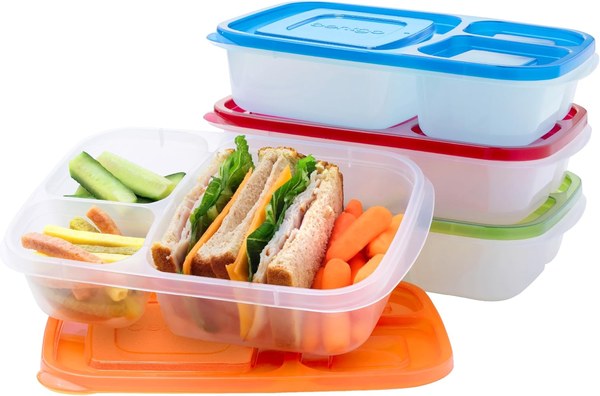 Bentgo Easyboxes 3-Compartment Bento (Set of 4) — pre-portioned compartments for grab-and-go school and work lunches.
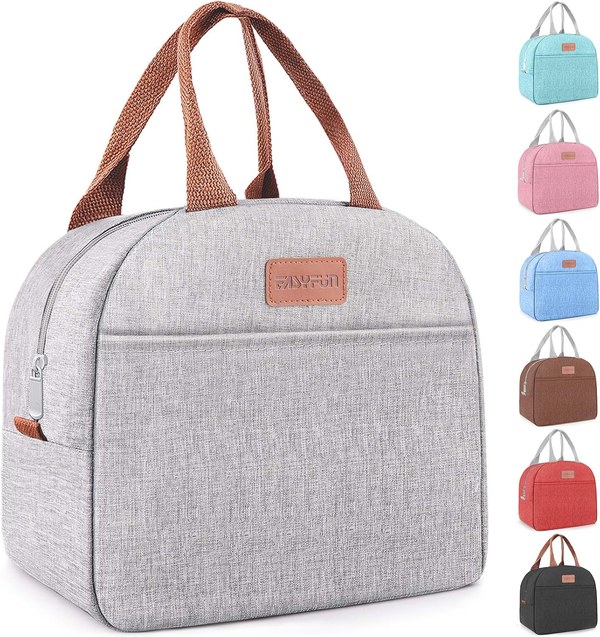 Insulated Leakproof Lunch Bag — keeps prepped meals cold until lunch without a fridge.
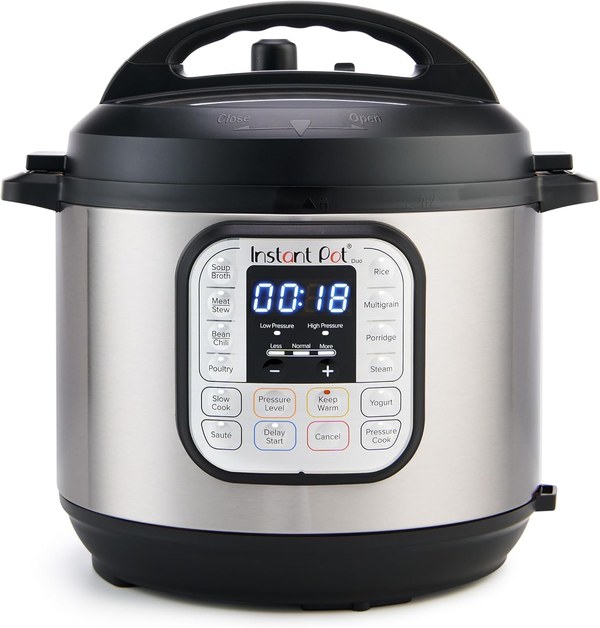 Instant Pot Duo 7-in-1 (6 Quart) — cooks a week of chicken and rice in one batch on Sunday.
Disclosure: as an Amazon Associate we earn from qualifying purchases. Prices are current as of writing and may change.