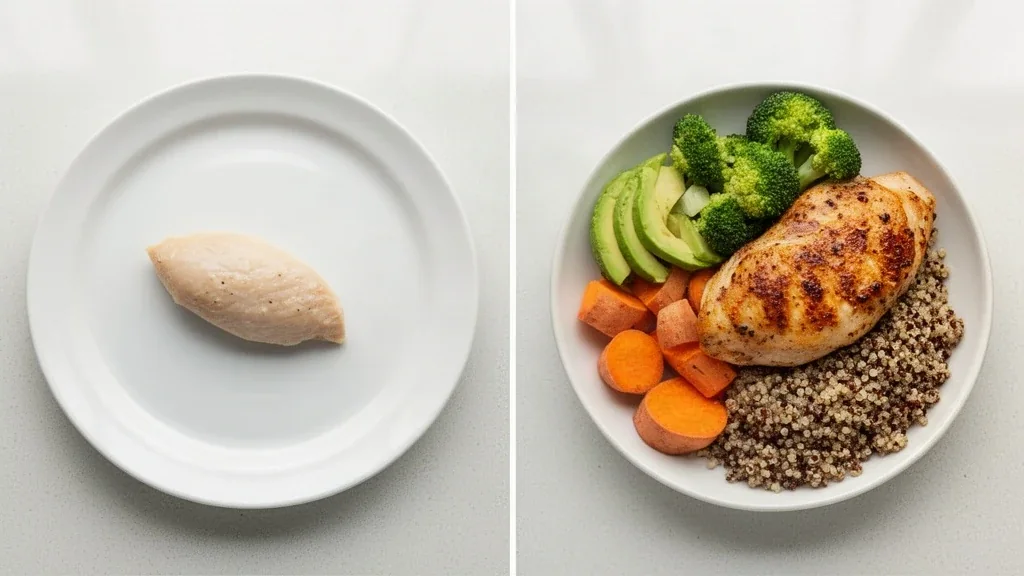
1,200-Calorie Meal Plans: Why Extreme Deficits Usually Fail
A 1,200-calorie daily diet is one of the most widely searched meal plan targets on the internet. It is also the exact threshold where most fat-loss phases fall apart.
For the vast majority of active adults, 1,200 calories sits well below Basal Metabolic Rate (BMR)—the bare minimum energy required to keep your brain, heart, liver, and cellular processes functioning at rest. When you force your body across an extreme energy deficit for more than a few days, your physiology responds predictably: resting metabolic rate slows down, Non-Exercise Activity Thermogenesis (NEAT) collapses, muscle mass breaks down, and hunger hormones surge.
Cutting calories works through an energy deficit, but an uncalibrated crash deficit compromises body composition and long-term adherence. Here is the physiological math behind why 1,200-calorie plans fail, how to identify your true metabolic baseline, and how to construct a moderate deficit that burns fat while preserving lean muscle.
The Basal Metabolic Rate Math
Energy expenditure is divided into four distinct components:
- Basal Metabolic Rate (BMR): 60–70% of total daily energy expenditure (TDEE). The energy burned just staying alive in a coma.
- Non-Exercise Activity Thermogenesis (NEAT): 15–20% of TDEE. Unconscious movement like fidgeting, walking, pacing, and maintaining posture.
- Thermic Effect of Food (TEF): 8–10% of TDEE. The caloric cost of digesting and absorbing macronutrients.
- Exercise Activity Thermogenesis (EAT): 5–10% of TDEE. Planned workouts and deliberate cardio.
To see why 1,200 calories fails, calculate BMR using the clinically validated Mifflin-St Jeor formula:
BMR (Men) = (10 × weight in kg) + (6.25 × height in cm) - (5 × age) + 5 BMR (Women) = (10 × weight in kg) + (6.25 × height in cm) - (5 × age) - 161
Sample Calculations for Common Demographics
-
35-year-old female (5’5” / 165 cm, 150 lbs / 68 kg):
BMR = (10 × 68) + (6.25 × 165) - (5 × 35) - 161 = 680 + 1031.25 - 175 - 161 = 1,375 kcal.
With light activity (10,000 steps daily or 3 gym sessions), her maintenance TDEE is roughly 1,900–2,050 calories. A 1,200-calorie diet is an aggressive 700–850 calorie deficit that undercuts her coma-level BMR by nearly 200 calories. -
40-year-old male (5’10” / 178 cm, 185 lbs / 84 kg):
BMR = (10 × 84) + (6.25 × 178) - (5 × 40) + 5 = 840 + 1112.5 - 200 + 5 = 1,757 kcal.
With moderate activity, his maintenance TDEE is roughly 2,400–2,600 calories. A 1,200-calorie diet creates an extreme 1,200–1,400 calorie deficit.
Eating below your BMR forces your endocrine system to downregulate energy-expensive processes like thyroid hormone production (T₃), reproductive hormone signaling, and immune efficiency.
The Three Failures of Extreme Deficits
Core Nutrition Planning & Macro Balance Protocol
- Calculate daily energy expenditure using Mifflin-St Jeor formulas and adjust for target rate of change.
- Distribute protein evenly across breakfast, lunch, dinner, and snacks for continuous muscle protein synthesis.
- Use digital food scales and airtight meal prep containers to eliminate guesswork in weekly nutrition.
Macro arithmetic verified against USDA FoodData Central and Atwater 4P+4C+9F standard.
When an aggressive caloric restriction is introduced without adequate energy availability, three specific physiological reactions occur:
1. Muscle Protein Breakdown
During a calorie deficit, the body breaks down stored adipose tissue for energy. If the deficit is too steep, the rate of fat mobilization cannot meet energy demands on its own. As demonstrated by Morton et al. (2018) and Helms et al. (2014), severe caloric restriction dramatically elevates muscle protein degradation. You lose scale weight rapidly, but up to 30–50% of that lost weight comes from functional lean muscle tissue rather than body fat.
2. Spontaneous NEAT Shutdown
Your brain constantly monitors systemic energy availability. When calories plunge to 1,200, your autonomic nervous system conserves energy by reducing subconscious movement. You stop fidgeting, sit more often, take fewer spontaneous steps, and feel lethargic. Studies evaluating metabolic adaptation (Trexler et al. 2014) show that NEAT can drop by 300 to 500 calories per day during severe restriction, effectively wiping out the intended deficit while leaving you exhausted.
3. The Macronutrient Squeeze
In human nutrition, energy is bounded by the macronutrient invariant:
Calories = (4 × Protein) + (4 × Carbs) + (9 × Fats)
The International Society of Sports Nutrition (Jäger et al. 2017) recommends 1.6 to 2.2 grams of protein per kilogram of bodyweight (0.7–1.0g per pound) to preserve muscle during fat loss.
For a 150-pound person, that means targeting 120–150g of protein:
- 130g Protein × 4 kcal/g = 520 kcal
- Essential dietary fat for hormone production and fat-soluble vitamin absorption (minimum 0.3g/lb) requires at least 45g Fat × 9 kcal/g = 405 kcal
- Subtotal: 520 + 405 = 925 kcal
In a 1,200-calorie budget, you are left with only 275 calories for carbohydrates—equivalent to just 68 grams of total carbs for the entire day. That leaves almost no room for dietary fiber, fruits, root vegetables, or training fuel.
1,200 kcal Crash Plan vs. 1,650 kcal Sustainable Deficit
The difference between a crash diet and a calculated moderate cut comes down to food volume, micronutrient density, and muscle preservation.
The tables below contrast an arbitrary 1,200-calorie day against a structured 1,650-calorie moderate deficit for a 150-pound individual. Every meal entry satisfies USDA FoodData Central standards and the 4P + 4C + 9F energy equation.
The Arbitrary 1,200-Calorie Crash Day
| Meal | Food Composition & Estimated Portions | Protein (g) | Carbs (g) | Fats (g) | Calories |
|---|---|---|---|---|---|
| Breakfast | 2 Scrambled Egg Whites + 1 slice Dry Toast + Black Coffee | 12 | 14 | 1 | 113 |
| Lunch | 4 oz Grilled Chicken Breast + 2 cups Mixed Greens + 1 tsp Light Dressing | 36 | 6 | 4 | 204 |
| Snack | 1 Small Apple + 10g Raw Almonds | 2 | 22 | 5 | 141 |
| Dinner | 5 oz White Fish (Cod) + 1 cup Steamed Broccoli + 1/2 cup Cooked Rice | 32 | 28 | 3 | 267 |
| Late Snack | 1/2 cup Nonfat Plain Greek Yogurt | 12 | 5 | 0 | 68 |
| Total | 5 Restrictive Feedings | 94g | 75g | 13g | 793 kcal* |
*Note: Even when attempting 1,200 calories, dieters often under-eat essential fats to extreme levels (13g fat is dangerously low for hormonal health) or struggle to reach 100g protein without supplements.
A Validated 1,650-Calorie Moderate Deficit
| Meal | Food Composition & Verified Portions | Protein (g) | Carbs (g) | Fats (g) | Verified Calories |
|---|---|---|---|---|---|
| Breakfast | Greek Yogurt Bowl + Berries + Granola (1 cup yogurt, 1/2 cup berries, 1/4 cup granola) | 20 | 45 | 8 | 332 |
| Lunch | Chicken Breast (6oz) + Rice (1 cup) + Steamed Broccoli | 54 | 45 | 8 | 468 |
| Afternoon Snack | 1 cup Low-Fat Cottage Cheese + 1 Medium Apple | 28 | 25 | 3 | 239 |
| Dinner | Salmon (5oz) + Sweet Potato (200g) + Roasted Asparagus | 38 | 35 | 18 | 454 |
| Evening Snack | 1 scoop Whey Protein in Water + 1 tbsp Peanut Butter | 26 | 5 | 8 | 196 |
| Total Daily Intake | Complete Whole-Food Day | 166g | 155g | 45g | 1,689 kcal |
Mathematical Line-Item Verification:
- Breakfast: (20 × 4) + (45 × 4) + (8 × 9) = 80 + 180 + 72 = 332 kcal
- Lunch: (54 × 4) + (45 × 4) + (8 × 9) = 216 + 180 + 72 = 468 kcal
- Snack: (28 × 4) + (25 × 4) + (3 × 9) = 112 + 100 + 27 = 239 kcal
- Dinner: (38 × 4) + (35 × 4) + (18 × 9) = 152 + 140 + 162 = 454 kcal
- Evening: (26 × 4) + (5 × 4) + (8 × 9) = 104 + 20 + 72 = 196 kcal
- Daily Sum: 332 + 468 + 239 + 454 + 196 = 1,689 kcal (166g P, 155g C, 45g F).
At 1,689 calories, you hit 166g of high-quality protein to protect lean tissue, consume 45g of healthy fats to maintain hormone production, and eat 155g of carbohydrates to maintain training intensity and cognitive focus.
How to Set a Deficit That Actually Works
Instead of picking an arbitrary number like 1,200 or 1,500 from social media, calculate your fat-loss targets using a three-step progression:
Step 1: Calculate Maintenance TDEE
[Bodyweight (lbs) x 14-16 Activity Multiplier] = Baseline Calories

Step 2: Apply a Conservative Deficit (15-25%)
[Baseline Calories x 0.80] = Target Fat Loss Calories (typically a 350-500 kcal deficit)

Step 3: Allocate Macronutrients Deterministically
Protein: 0.8-1.0g per lb of bodyweight (4 kcal/g)
Fats: 0.3-0.4g per lb of bodyweight (9 kcal/g)
Carbs: Remainder of total calories divided by 4 kcal/g
Example: Setting a Cut for a 160 lb Lifter
- Maintenance: 160 lbs × 15 = 2,400 kcal/day.
- Deficit Target (20% reduction): 2,400 × 0.80 = 1,920 kcal/day (480 kcal deficit).
- Protein Target: 160g × 4 kcal = 640 kcal.
- Fat Target: 55g × 9 kcal = 495 kcal.
- Carb Allocation: (1,920 - 640 - 495) = 785 kcal ÷ 4 = 196g Carbs.
This results in a daily target of 160g Protein / 196g Carbs / 55g Fat (1,919 kcal). Fat loss proceeds steadily at 0.75 to 1.0 pound per week while workouts remain strong and hunger remains manageable.
Common Deficit Traps to Avoid
- Confusing Scale Weight with Fat Loss: A 4-pound drop in three days on a 1,200-calorie diet is primarily glycogen depletion and water excretion, not 4 pounds of body fat. Real adipose loss requires time.
- Weekend Binge Cycles: Strict adherence to 1,200 calories Monday through Friday often triggers psychological deprivation that results in a 3,500-calorie surplus on Saturday and Sunday. A steady 1,700 calories across all seven days yields superior weekly fat loss.
- Neglecting Food Weight Changes: Raw meats lose 20–25% of their water weight during cooking. If you weigh cooked chicken but log it using raw nutrition data, you will miscalculate your protein intake. For more on this, review our guide to common macro tracking mistakes.
- Staying in a Deficit Indefinitely: If fat loss stalls after 12–16 weeks of consistent adherence, do not drop calories further. Instead, implement a planned recovery phase as outlined in our guide to reverse dieting.
The Bottom Line
Extreme 1,200-calorie diets treat fat loss as an emergency rather than a manageable biological process. When you under-eat beneath your basal metabolic rate, your body defends itself by slowing down, breaking down muscle tissue, and driving intense appetite spikes.
Set a moderate 15–20% deficit from your real maintenance expenditure, keep protein above 0.8g per pound of bodyweight, and build meals with whole foods that you can sustain for months.
Sources
- Helms ER, et al. (2014) Evidence-based recommendations for natural bodybuilding contest preparation: nutrition and supplementation. J Int Soc Sports Nutr, 11:20
- Jäger R, et al. (2017) International Society of Sports Nutrition Position Stand: protein and exercise. J Int Soc Sports Nutr, 14:20
- Morton RW, et al. (2018) Systematic review and meta-analysis of protein intake. Br J Sports Med, 52(6):376-384
- Trexler ET, Smith-Ryan AE, Norton LE. (2014) Metabolic adaptation to weight loss: implications for the athlete. J Int Soc Sports Nutr, 11:7
- USDA FoodData Central
Ready to calculate meals that fit your true maintenance and deficit targets? Use our Macro Meal Reverser to reverse-engineer meal plans from verified, mathematically exact database entries.
Tools That Make This Easier
A few tools remove the guesswork from the math above:
 Etekcity Smart Nutrition Food Scale — weighs small portions accurately so a 1,200-calorie day doesn’t drift from under-eating to over-eating.
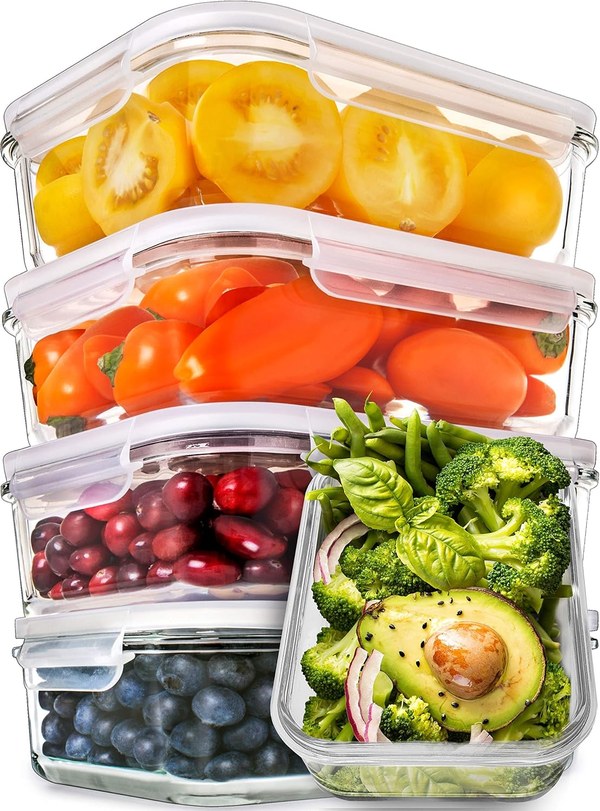 Prep Naturals Glass Meal Prep Containers (30oz, 5-Pack) — pre-portion low-calorie meals so every plate stays inside the deficit.
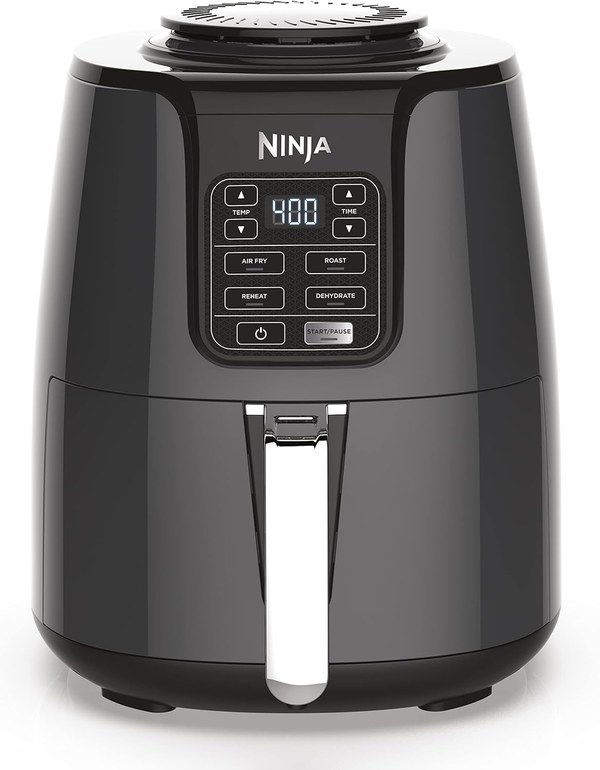 Ninja AF101 Air Fryer (4 Quart) — cooks lean protein without the hidden oil calories that wreck a tight deficit.
Disclosure: as an Amazon Associate we earn from qualifying purchases. Prices are current as of writing and may change.