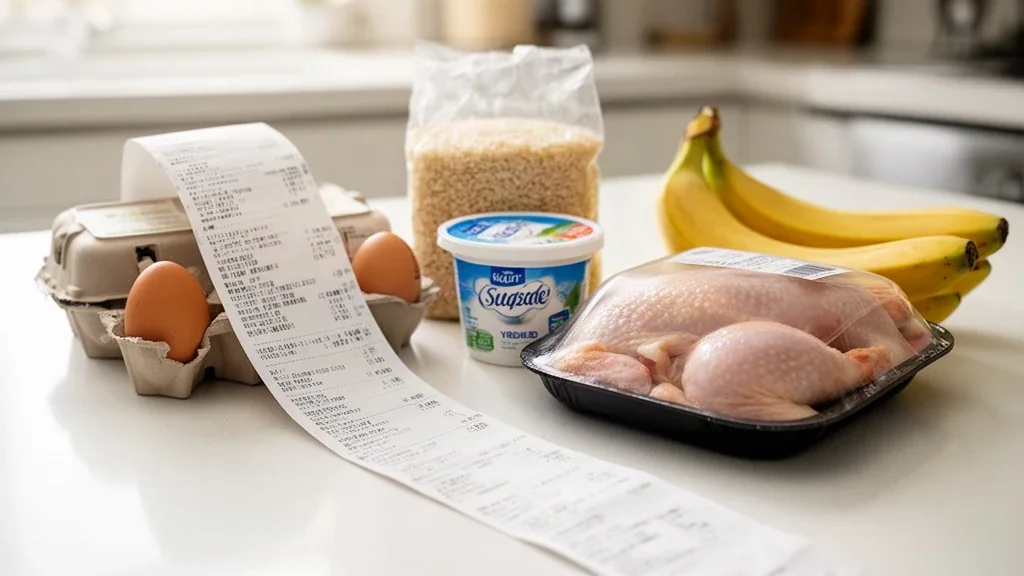
Average Grocery Bill vs. A High-Protein Macro Budget: How to Hit Your Targets for Less
The average single adult in the United States spends between $320 and $430 per month on groceries—roughly $75 to $100 per week—according to official USDA Moderate-Cost Food Plan benchmarks. Yet many people starting a fitness journey assume that hitting a serious protein target (150g to 200g daily) requires doubling their food budget on expensive pre-made shakes, boutique organic meats, and branded fitness snacks.
It does not. With strategic food selection and bulk planning, an optimized high-protein diet (160g protein, 200g carbohydrates, 60g fat = 1,980 kcal/day) costs between $65 and $85 per week. That is lower than what the average American spends on ultra-processed convenience foods.
Here is how the numbers break down, how to calculate your cost per gram of protein, and a complete 7-day budget macro meal plan.
The Short Answer: Benchmark Spending vs. High-Protein Reality
The table below contrasts standard consumer grocery expenditures with a calculated high-protein grocery budget based on staple whole foods.
| Budget Tier | Monthly Spend (1 Person) | Weekly Spend | Typical Daily Protein | Primary Food Sources |
|---|---|---|---|---|
| USDA Thrifty Plan | ~$250 - $280 | ~$60 - $65 | 60g - 80g | Grains, beans, low-cost processed items |
| USDA Moderate Plan | ~$340 - $410 | ~$80 - $95 | 70g - 90g | Mixed groceries, packaged meats, convenience snacks |
| High-Protein Budget (Optimized) | ~$260 - $340 | ~$65 - $85 | 150g - 180g | Whole eggs, canned tuna, chicken breast, dry oats, rice |
| Premium High-Protein (Convenience) | ~$500 - $700 | ~$120 - $160 | 160g - 200g | Protein bars, RTD shakes, pre-marinated cuts, beef jerky |
The difference between spending $75 a week and $150 a week on a high-protein diet is not the quantity of protein. It is the form of protein. Whole staple proteins purchased in volume cost a fraction of branded packaged items.
Cost Per Gram of Protein: The Efficiency Metric
Batch Meal Prep & Storage Efficiency Protocol
- Store cooked chicken breast, sweet potatoes, and rice in portioned glass containers for up to 4 days.
- Freeze meals for days 5-7 in airtight vacuum-sealed bags to eliminate ice crystallization.
- Batch-chop high-volume vegetables (peppers, onions, broccoli) in bulk to save 30+ minutes weekly.
Macro arithmetic verified against USDA FoodData Central and Atwater 4P+4C+9F standard.
To control your grocery bill while hitting high macronutrient targets, evaluate protein sources by cost per gram of pure protein, rather than price per pound.
Nutritional economics research (such as Drewnowski 2010 in the American Journal of Clinical Nutrition) demonstrates that energy-dense, nutrient-poor foods often appear cheaper per calorie, while lean animal and plant proteins have higher upfront costs. However, ranking protein staples by usable protein yield reveals clear budget winners:
| Protein Source | Typical Market Price (2026) | Standard Serving Size | Protein per Serving | Cost per Gram of Protein |
|---|---|---|---|---|
| Dry Brown Lentils | $1.50 / lb (454g) | 100g dry | 24.6g | ~$0.013 / g |
| Large Eggs (Grade A) | $2.40 / dozen | 2 eggs (100g) | 12.6g | ~$0.032 / g |
| Boneless Chicken Breast | $3.49 / lb (454g) | 6 oz raw (170g) | 39.0g | ~$0.034 / g |
| Canned Tuna (in water) | $1.10 / can (5 oz) | 1 can drained | 28.0g | ~$0.039 / g |
| Whey Protein Concentrate | $32.00 / 2 lb tub | 1 scoop (30g) | 24.0g | ~$0.044 / g |
| Nonfat Plain Greek Yogurt | $3.99 / 32 oz tub | 1 cup (227g) | 20.0g | ~$0.044 / g |
| Canned Black Beans | $0.95 / can (15 oz) | 1/2 cup (130g) | 7.0g | ~$0.045 / g |
| Lean Ground Beef (93/7) | $5.99 / lb | 6 oz raw (170g) | 36.0g | ~$0.062 / g |
| Pre-Made Protein Bars | $2.50 / bar | 1 bar (60g) | 20.0g | ~$0.125 / g |
| Beef Jerky | $5.50 / 3 oz bag | 3 oz bag | 33.0g | ~$0.166 / g |
Note: Food prices fluctuate by region and season. Data based on USDA FoodData Central nutrient profiles (e.g., FDC 171287 for eggs, FDC 175158 for canned tuna, FDC 172420 for dry lentils) and national supermarket averages.
The takeaway is straightforward: anchoring your daily nutrition around eggs, chicken breast, canned tuna, Greek yogurt, and bulk lentils keeps your protein cost under $0.045 per gram. In contrast, relying on packaged fitness snacks increases your protein expense by 300% to 400%.
Worked Example: Full Day at 160g Protein for $7.75
Here is a balanced, whole-food day providing 1,980 calories with 160g of protein, 200g of carbohydrates, and 60g of fat.
Every meal is calculated using strict macronutrient arithmetic ((160P × 4) + (200C × 4) + (60F × 9) = 640 + 800 + 540 = 1,980 kcal):
Daily Target: 1,980 Calories | 160g Protein | 200g Carbs | 60g Fat
Estimated Daily Grocery Cost: $7.75 (approx. $54.25 / week base)
1. Breakfast: Scrambled Eggs, Toast, and Banana
- 3 whole Large Eggs (scrambled)
- 1/2 cup liquid Egg Whites
- 2 slices Whole Wheat Toast
- 1 medium Banana
| Macro | Quantity |
|---|---|
| Protein | 32g |
| Carbs | 55g |
| Fats | 16g |
| Calories | 492 kcal |
| Est. Cost | ~$1.45 |
2. Lunch: Chicken Breast, Jasmine Rice, and Broccoli
- 6 oz (cooked weight) Chicken Breast
- 1 cup (cooked) White Jasmine Rice
- 1.5 cups steamed Broccoli florets
- 1 tsp Olive Oil for cooking
| Macro | Quantity |
|---|---|
| Protein | 54g |
| Carbs | 45g |
| Fats | 8g |
| Calories | 468 kcal |
| Est. Cost | ~$2.10 |
3. Afternoon Snack: Greek Yogurt Oat Bowl
- 1 cup (227g) Plain Nonfat Greek Yogurt
- 1/2 cup (40g) Rolled Oats (mixed in raw or soaked)
- 1/2 cup frozen Blueberries (thawed)
- 1 tsp Honey
| Macro | Quantity |
|---|---|
| Protein | 26g |
| Carbs | 52g |
| Fats | 4g |
| Calories | 348 kcal |
| Est. Cost | ~$1.60 |
4. Dinner: Tuna Sweet Potato Mash with Green Beans
- 1.5 cans (7.5 oz total) Chunk Light Tuna in Water (drained)
- 1 large Baked Sweet Potato (approx. 250g)
- 1.5 cups steamed Green Beans
- 1 tbsp Extra Virgin Olive Oil (drizzled over potato and greens)
| Macro | Quantity |
|---|---|
| Protein | 48g |
| Carbs | 48g |
| Fats | 32g |
| Calories | 672 kcal |
| Est. Cost | ~$2.60 |
Daily Macronutrient & Cost Summary
| Meal | Protein | Carbs | Fats | Calories | Est. Cost |
|---|---|---|---|---|---|
| Breakfast | 32g | 55g | 16g | 492 | $1.45 |
| Lunch | 54g | 45g | 8g | 468 | $2.10 |
| Snack | 26g | 52g | 4g | 348 | $1.60 |
| Dinner | 48g | 48g | 32g | 672 | $2.60 |
| Total | 160g | 200g | 60g | 1,980 | $7.75 |
Adding a $20 buffer per week for cooking oils, spices, garlic, salt, and black coffee brings the total weekly grocery expenditure to roughly $74.25 per week—well within the national average while delivering more than double the protein of a standard diet.
Strategic Swaps to Adjust Your Grocery Budget
When food prices shift or sales occur, maintain your macronutrient balance by swapping ingredients within the same macronutrient category:
| Current Food | Macro Profile | Budget-Friendly Swap | Macro Impact | Cost Impact |
|---|---|---|---|---|
| Fresh Salmon Fillet (5 oz) | 38P / 0C / 18F | Canned Pink Salmon or Canned Sardines | Equal protein & omega-3s | Saves ~$2.50 / serving |
| Boneless Chicken Breast (6 oz) | 54P / 0C / 5F | Pork Tenderloin or Boneless Pork Chops | Similar lean profile | Saves ~$0.80 / serving |
| Fresh Blueberries (1 pint) | 1P / 21C / 0.5F | Frozen Mixed Berries (2 lb bag) | Identical micronutrients | Saves ~$0.60 / serving |
| Microwave Rice Pouches | 4P / 45C / 2F | Bulk Dry Jasmine Rice (20 lb bag) | Identical carbs | Saves ~$1.20 / serving |
| Pre-cut Veggie Trays | 2P / 10C / 0F | Whole Carrots, Cabbage, and Broccoli heads | More volume & fiber | Saves ~$2.00 / bag |
If you need higher protein targets (such as 200g daily for larger athletes), read our comprehensive guide on how to hit 200g of protein daily using whole foods.
4 Practical Rules for Low-Cost Macro Shopping
1. Buy Carbs in 10-to-20-Pound Bulk Bags
Carbohydrates are the cheapest macronutrient per gram, but buying single-serve pouches, branded artisan breads, and microwave bowls inflates carb costs by 500%. A 20-pound bag of long-grain white or jasmine rice costs $12 to $16 and provides over 70 single-cup servings (less than $0.22 per meal). Rolled oats in 5-pound containers cost around $0.15 per 50-gram serving.
2. Leverage Frozen Vegetables Over Fresh
Fresh produce that spoils in the crisper drawer is pure financial waste. Frozen broccoli, spinach, green beans, and cauliflower are flash-frozen at peak nutritional density, have zero prep waste (no stems to discard), and cost 30% to 50% less per edible pound.
3. Combine Incomplete Plant Proteins with Lean Animal Anchors
Combining high-protein legumes (lentils, chickpeas, black beans) with small portions of poultry or eggs reduces meat volume while preserving amino acid completeness and fiber. A bowl containing 100g of lentils and 3 oz of chicken provides over 40g of protein at half the price of an 8 oz steak.
4. Separate Protein Buying from “Fitness” Marketing
Never pay a markup for foods labeled “High-Protein” if they are simply standard foods fortified with tiny amounts of soy isolate (e.g., protein cookies with 10g protein and 30g sugar for $3.00). Stick to single-ingredient whole foods.
Build Your Custom Meal Plan
Need to adjust these meal combinations for your specific calorie targets, cutting deficit, or bulking phase? Use our free Macro Meal Planner. Enter your daily protein, carbohydrate, and fat targets, and the tool will calculate exact meal combinations that fit your numbers and your grocery budget.
Evidence and Sources
- Drewnowski A. (2010). The nutrient rich foods index helps to identify healthy, affordable foods. The American Journal of Clinical Nutrition, 91(4), 1099S–1107S.
- Morton R. W., et al. (2018). A systematic review, meta-analysis and meta-regression of the effect of protein supplementation on resistance training-induced gains in muscle mass and strength in healthy adults. British Journal of Sports Medicine, 52(6), 376–384.
- USDA FoodData Central. Nutrient profiles for Eggs (FDC 171287), Canned Tuna (FDC 175158), Chicken Breast (FDC 171077), and Dry Lentils (FDC 172420). Agricultural Research Service, fdc.nal.usda.gov.
- USDA Official Food Plans. Cost of Food at Home Reports (Thrifty, Low, Moderate, and Liberal Food Plans). Center for Nutrition Policy and Promotion.
Tools That Make This Easier
A few tools remove the guesswork from the math above:
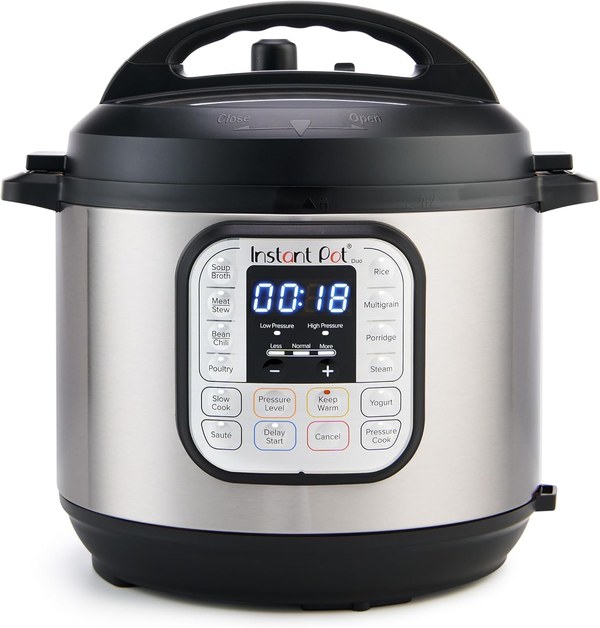 Instant Pot Duo 7-in-1 (6 Quart) — makes cheap cuts and dry beans go further per dollar.
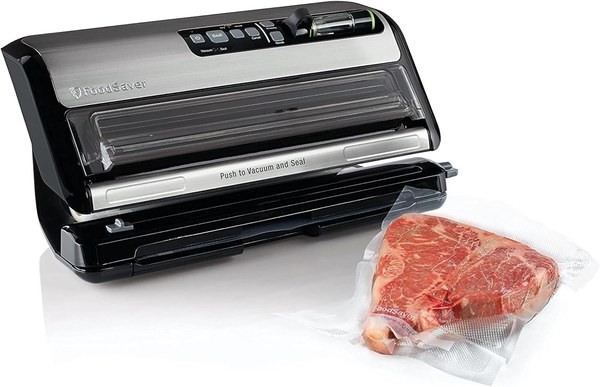 FoodSaver PowerVac Vacuum Sealer — buys protein on sale in bulk and freezes it without freezer burn.
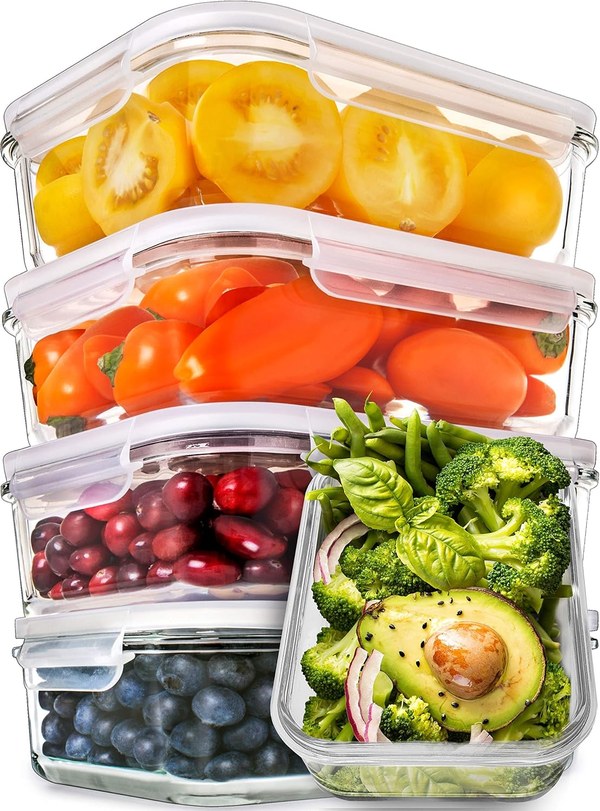 Prep Naturals Glass Meal Prep Containers (30oz, 5-Pack) — keeps budget batch meals portioned instead of getting thrown out.
Disclosure: as an Amazon Associate we earn from qualifying purchases. Prices are current as of writing and may change.