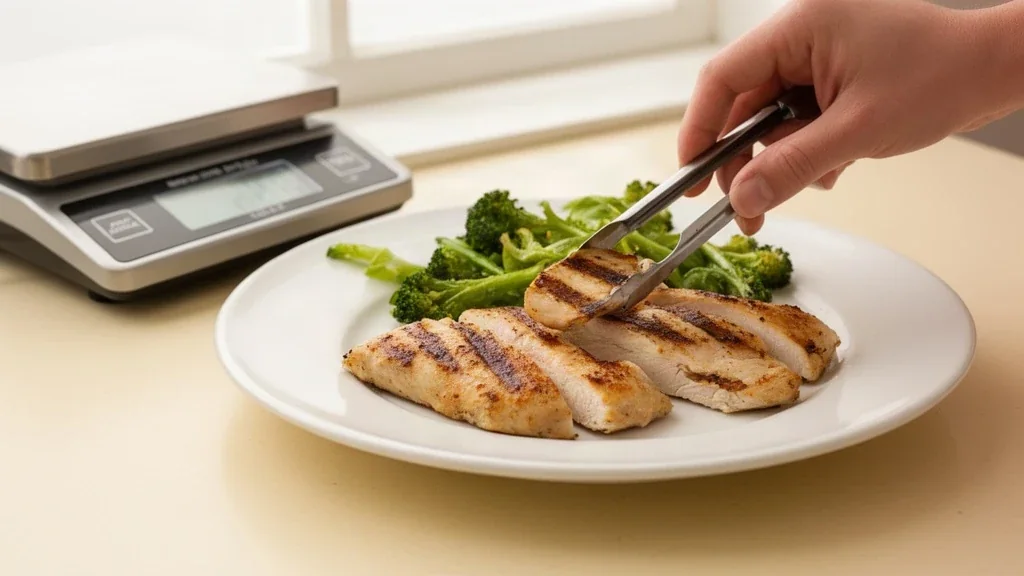
Why AI Meal Planners Can't Hit Exact Macros (And What Actually Works)
If you ask ChatGPT, Claude, or a dedicated AI diet app for a 2,060-calorie daily meal plan with 180g protein, 200g carbs, and 60g fat, the output will look convincing. It will provide four organized meals, precise ingredient quantities, and a neat summary at the bottom declaring: “Total: 2,060 calories, 180g Protein, 200g Carbs, 60g Fat.”
If you take those listed food weights and verify them against USDA FoodData Central, the illusion collapses immediately.
The actual food items in standard AI outputs consistently miss stated targets by 300 to 600 calories and 30 to 50 grams of protein. Large Language Models (LLMs) cannot do deterministic arithmetic. They generate plausible-sounding text, not verified nutritional formulas.
Here is an analysis of why AI meal generators fail at nutritional math, the four specific hallucination modes they suffer from, and how deterministic calculation solves the problem.
The 180P / 200C / 60F Test
The failure is easy to reproduce. Ask any AI chat tool for a 2,060-calorie day with these targets:
“Generate a 1-day meal plan with 4 meals. Total daily targets must equal exactly: 180g Protein, 200g Carbohydrates, 60g Fat (2,060 Calories). Include food names, gram/ounce weights, and individual macros per meal.”
The tool will declare the plan a perfect 2,060 kcal in its summary. Then check the actual foods it listed against USDA FoodData Central and the totals drift.
The mathematical baseline is non-negotiable:
- 180g Protein × 4 kcal/g = 720 kcal
- 200g Carbs × 4 kcal/g = 800 kcal
- 60g Fat × 9 kcal/g = 540 kcal
- True Mathematical Total: 2,060 kcal
The Recurring Audit Pattern
Across repeated audits of AI-generated plans, the same four gaps show up: the listed foods under-deliver protein, the calorie total lands hundreds of calories off in either direction, raw and cooked weights get conflated, and cooking oils are left out of the summary. A plan that self-reports 180g protein routinely adds up to 140–150g when you weigh the ingredients, and the calorie total can land 250 to 500 kcal away from the stated number.
The direction of the error isn’t even consistent — sometimes over, sometimes under — which is exactly what you’d expect from text prediction rather than arithmetic. A deterministic tool doesn’t estimate the total; it sums fixed database values and cannot drift.
If an athlete relies on a generated plan during a strict fat-loss cut or lean muscle-building phase, that drift means under-eating protein by 20% or blowing the intended calorie target without realizing it.
Why Generative AI Fails at Basic Nutrition Math
Precision Food Weighing & Macro Tracking Checklist
- Always weigh meats and grains raw before moisture shifts occur during cooking.
- Use the digital tare function to zero out bowls before adding high-density fats or nut butters.
- Cross-check packaged nutrition labels against the Atwater formula: (4 x P) + (4 x C) + (9 x F) = Total Calories.
Macro arithmetic verified against USDA FoodData Central and Atwater 4P+4C+9F standard.
The failure of LLMs to generate accurate meal plans stems from their underlying architecture:
1. Token Prediction vs. Linear Algebra
LLMs are statistical pattern engines. They predict the most likely next word or number based on billions of parameters. When an AI generates “6 oz chicken breast,” it knows that chicken breast is associated with high protein, so it predicts a high number like “45g protein” or “50g protein” regardless of whether that number represents raw or cooked weight.
An AI does not run an internal spreadsheet summing row values against column constraints. It outputs the number that looks right in context.
2. The Calorie Invariant Collapse (4P + 4C + 9F ≠ Calories)
In human nutrition, energy is bounded by the 4/4/9 rule. If a meal contains 40g Protein, 50g Carbs, and 10g Fat, its caloric value is mathematically fixed at 450 kcal (160 + 200 + 90).
Generative models routinely output meals such as:
“Meal 2: Turkey Bowl — 45g Protein, 60g Carbs, 15g Fat, 380 Calories.”
If you calculate the actual macros: (45 × 4) + (60 × 4) + (15 × 9) = 180 + 240 + 135 = 555 Calories. The AI hallucinated 175 calories out of thin air to make the meal fit its self-declared target.
3. Overstated Protein Densities
AI models frequently confuse raw weights with cooked weights. A 4 oz raw chicken breast yields roughly 24–26g of protein. AI models routinely assign 35–40g of protein to 4 oz of raw chicken, assuming the density of cooked, dehydrated meat while prescribing raw grocery portion weights.
4. Invisible Cooking Fats and Hidden Condiments
When generating recipes, AI models include cooking steps such as “sauté the vegetables in 1 tablespoon of olive oil” or “drizzle with sesame oil and honey.”
However, when calculating the macro summary for that meal, the model often drops the cooking oil entirely, recording 0g of added fat. That single invisible tablespoon adds 14g of fat and 120 uncounted calories to your daily intake.
Auditing an AI Plan vs. Verified Deterministic Math
To demonstrate what a mathematically verified 180P / 200C / 60F plan actually requires, examine the table below.
Every single meal line item has been cross-referenced with USDA FoodData Central and strictly satisfies (4 × Protein) + (4 × Carbs) + (9 × Fats) = Calories.
A Mathematically Validated 2,060 kcal Daily Plan
| Meal | Food Ingredients & Portions | Protein (g) | Carbs (g) | Fats (g) | Verified Calories |
|---|---|---|---|---|---|
| Meal 1: High-Protein Breakfast | 4 Large Whole Eggs (weighed), 2 Slices Whole Grain Toast, 1 cup Skim Milk, 1 tsp Butter | 36 | 38 | 24 | 512 |
| Meal 2: Post-Workout Lunch | 6 oz Raw Chicken Breast (boneless/skinless), 1.25 cups Cooked Jasmine Rice, 1 cup Steamed Broccoli, 1 tsp Olive Oil | 56 | 58 | 12 | 564 |
| Meal 3: Afternoon Snack | 1 cup Nonfat Greek Yogurt (227g), 1 scoop (30g) Whey Protein Isolate, 1/2 cup Fresh Berries, 1 oz (28g) Whole Almonds | 50 | 42 | 14 | 494 |
| Meal 4: Balanced Dinner | 6 oz 93/7 Lean Ground Turkey, 250g Baked Sweet Potato, 1.5 cups Green Beans, 1 tsp Olive Oil | 38 | 62 | 10 | 490 |
| Verified Daily Total | 4 Structured Meals | 180g | 200g | 60g | 2,060 kcal |
Individual Line-Item Arithmetic Verification
- Meal 1: (36 × 4) + (38 × 4) + (24 × 9) = 144 + 152 + 216 = 512 kcal.
- Meal 2: (56 × 4) + (58 × 4) + (12 × 9) = 224 + 232 + 108 = 564 kcal.
- Meal 3: (50 × 4) + (42 × 4) + (14 × 9) = 200 + 168 + 126 = 494 kcal.
- Meal 4: (38 × 4) + (62 × 4) + (10 × 9) = 152 + 248 + 90 = 490 kcal.
- Day Sum: 512 + 564 + 494 + 490 = 2,060 kcal (720 kcal P + 800 kcal C + 540 kcal F).
For evidence on optimal protein distribution and dose-response thresholds across meals, refer to Schoenfeld & Aragon 2018 and the ISSN Position Stand (Jäger et al. 2017).
Why Deterministic Database Reversal Beats Generative Prompting
The difference between a probabilistic chatbot and a deterministic nutrition engine comes down to constraint satisfaction:
Generative AI Workflow (Probabilistic):
Prompt Target ➔ Predict Text Tokens ➔ Guess Food Names ➔ Hallucinate Macros ➔ Total Variance: ±350 kcal

Deterministic Reversal Workflow (Mathematical):
Target Inputs ➔ Query Verified Food Database ➔ Knapsack Optimization ➔ Invariant Enforcement (4P+4C+9F) ➔ Total Variance: 0 kcal
A deterministic calculator does not “write” a recipe. It searches a compiled, verified database of meals where every line item is pre-validated to USDA nutritional standards. It uses optimization algorithms to assemble meal combinations that match your exact calorie and macronutrient targets.
When you use a tool like the Macro Meal Reverser, the system evaluates thousands of verified combinations per second to find meals that hit your numbers without mathematical drift.
How to Audit Any AI-Generated Meal Plan in 60 Seconds
If you use AI tools to generate recipes or cooking ideas, run this three-step validation check before putting food in your grocery cart:
- The 4/4/9 Formula Check: Take the total protein grams (× 4), carb grams (× 4), and fat grams (× 9). Sum them together. If that number does not equal the stated calorie total within 10 calories (allowing for minor rounding), the plan is hallucinated.
- The Single-Source Protein Reality Check: Identify the primary protein in each meal. Raw chicken, turkey, and lean beef deliver roughly 6–7g of protein per raw ounce. If a recipe claims 4 oz of chicken provides 45g of protein, subtract 18g from the plan’s daily protein tally.
- The Hidden Fat Scan: Read the recipe instructions for phrases like “cook in oil,” “butter the pan,” or “toss with dressing.” Add 14g of fat (120 kcal) for every tablespoon of unlisted oil mentioned in the preparation steps.
To understand more common measurement traps, read our breakdown of common macro tracking mistakes.
Two More Ways AI Planners Fail: Leftovers and Fake Credentials
Arithmetic isn’t the only failure mode. Two more are common enough to matter when you choose a tool.
AI Plans Ignore Leftovers and Grocery Reality
Ask a chatbot for a week of meals and it returns 21 distinct recipes with no ingredient reuse — single-serving portions of salmon, turkey, and steak that force either a large grocery bill or a fridge full of produce going bad. It writes each meal in isolation and keeps no inventory of what you cooked the day before.
Batch cooking and deliberate leftovers are how real people hit macros without running a restaurant kitchen. A plan that reuses one protein and one carb across several meals is easier to shop for, cheaper, and produces far less waste.
“Dr. Reviewed” Bylines Are Often Persona Farms
Some apps stamp a smiling stock photo and a “Medically Reviewed by Dr. …” badge on their plans to manufacture authority. Search the name in a licensing database and the doctor often doesn’t exist — the headshot is a stock photo and the byline is a marketing construct. Real credentials are verifiable; a fictional persona is not a source of nutrition accuracy.
Both problems share the same root as the math errors: the plan looks professional, but nothing behind it was actually checked.
The Bottom Line
Generative AI is a powerful tool for brainstorming flavor pairings and finding recipe inspiration. It is an unreliable tool for calculating macronutrient targets and energy balance.
When you need exact numbers for fat loss, muscle gain, or athletic performance:
- Never trust summary numbers generated by an LLM.
- Validate ingredients against USDA FoodData Central.
- Use a deterministic engine that enforces the 4P + 4C + 9F energy equation.
Sources
- Jäger R, et al. (2017) International Society of Sports Nutrition Position Stand: protein and exercise. J Int Soc Sports Nutr, 14:20
- Morton RW, et al. (2018) Systematic review and meta-analysis of protein intake. Br J Sports Med, 52(6):376-384
- Schoenfeld BJ, Aragon AA. (2018) How much protein can the body use in a single meal for muscle-building? J Int Soc Sports Nutr, 15:10
- USDA FoodData Central
Stop guessing with conversational chatbots. Use our Macro Meal Reverser to reverse-engineer meal plans from verified, mathematically exact database entries.
Tools That Make This Easier
A few tools remove the guesswork from the math above:
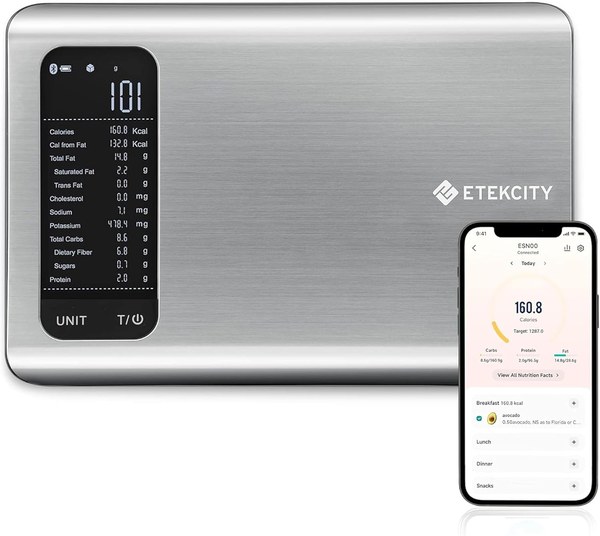 Etekcity Smart Nutrition Food Scale — the one tool that replaces AI guesswork with real gram weights.
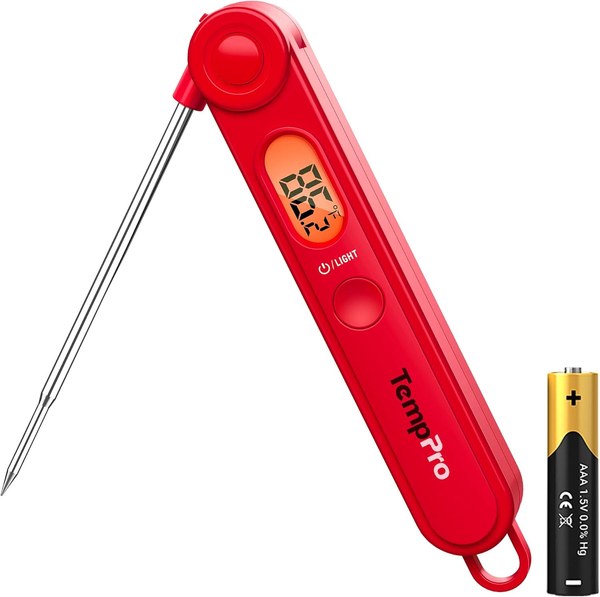 ThermoPro TP03 Instant-Read Meat Thermometer — hits precise cook temps that a generated recipe won’t verify.
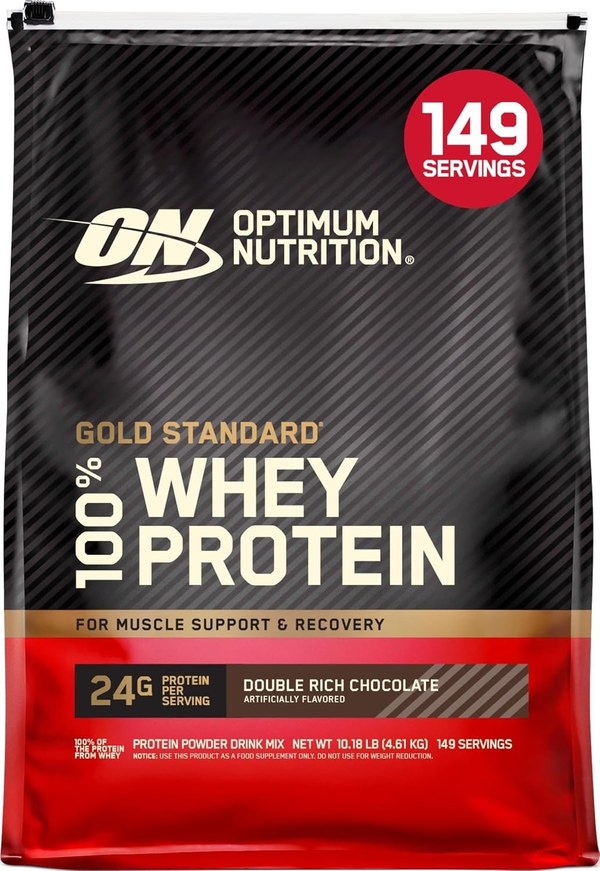 Optimum Nutrition Gold Standard 100% Whey (5 lb) — a measured 24g-per-scoop protein source instead of a hallucinated macro total.
Disclosure: as an Amazon Associate we earn from qualifying purchases. Prices are current as of writing and may change.